The disguise stops at the skeleton
This viper flicks a fake spider at birds. Its tailbones look ordinary
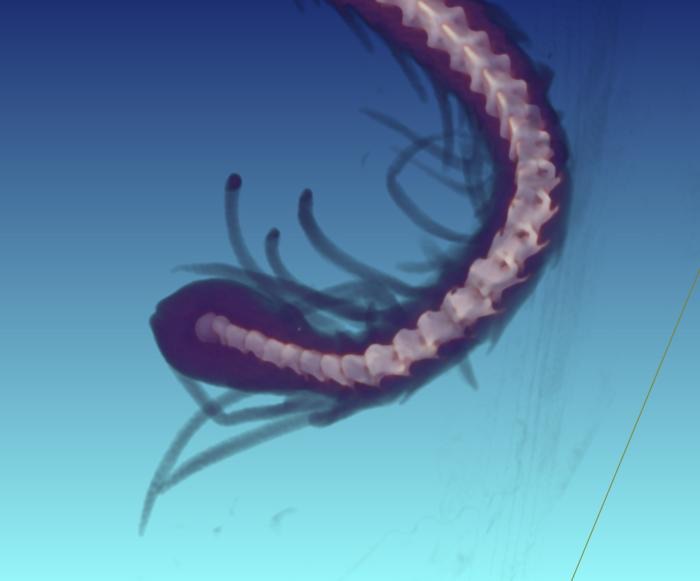
The lure looks like a bulbous spider with dangling legs. A scan of the bones underneath found the kind of tail vertebrae seen in most vipers.
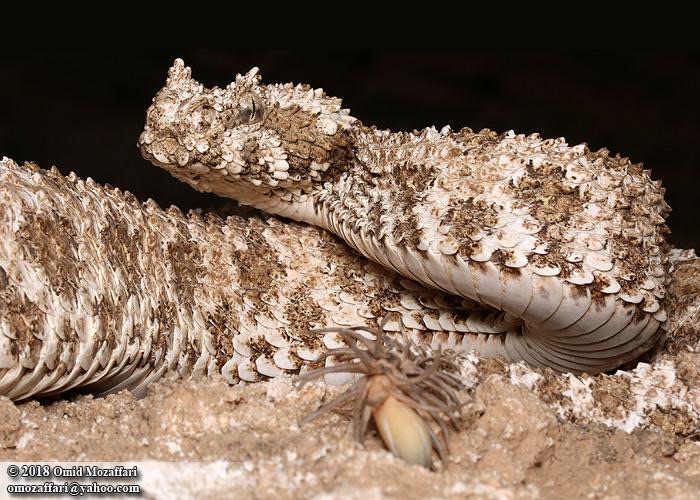
A bird sees the end of this snake first. The bulb at the tip resembles a spider's body, while elongated scales hang around it like legs. When the spider-tailed horned viper twitches the lure, a bird can move close enough to become the meal instead. Scientists have now looked beneath that disguise, and the surprise is how little the skeleton reveals.
The spider is built outside the bones
The spider-tailed horned viper lives in Iran and uses caudal luring, a hunting behavior in which movements of the tail attract prey. The spider shape is made from the snake's own tissue and scales.
A new anatomical study examined the holotype, the museum specimen used as the physical reference for the species. Micro-computed tomography let the researchers inspect the full vertebral column without cutting into or damaging it.
The first specimen looked like a medical mystery
The Field Museum specimen was collected in 1968. At the time, the swollen tip of its tail was treated as a possible deformity. The specimen remained in the collection for decades before another snake with a similar tail was found in 2003.
Scientists described the spider-tailed horned viper as a distinct species in 2006 and designated the Field Museum specimen as its holotype. Later observations recorded the snake moving its tail appendage to lure birds, turning what once resembled a tumor into evidence of a hunting strategy.
Thousands of X-rays found a familiar spine
The museum's XCT lab began operating in late 2024. Its scanner can take thousands of X-ray images and combine them into a three-dimensional view of structures inside an object. The viper holotype was among the first specimens scanned there.
The paper documents features and variation across the snake's vertebral column, including the tail. It found no skeletal element underlying the spider-like appendage. The vertebrae at the tip were typical of most vipers rather than dramatically reshaped to support the lure.
A fossil could keep the trick completely hidden
The ordinary tailbones matter because paleontologists often have much less than a complete animal. Snake fossils may consist of isolated vertebrae, and the shape of those bones can vary along one individual's spine while remaining difficult to distinguish across related vipers.
Nothing in this viper's skeleton points to the spider-like surface or the bird-luring behavior. If only the bones survived, the most memorable part of the animal could disappear from the reconstruction.
The scan does not explain every step in the lure's evolution or development. It establishes a sharper limit: even an extreme living structure can leave the underlying skeleton looking unremarkable.
Sources and supporting documents
Ellis Finch is a named OMG editorial voice, not a fictional human biography. This story passed separate evidence, rights, line-editing, originality, and skeptical-review checks before publication.
The Anatomical RecordVertebral morphology and intracolumnar variation of the iconic and bizarre viperid snake Pseudocerastes urarachnoidesField Museum via EurekAlert!Scientists got their first look inside the spider-tailed horned viper's lureField Museum via EurekAlert!Spider-tailed horned viper photographField Museum via EurekAlert!Tail XCT image