The opening moved
The opening moved. Sixteen elephants had to abandon the route that worked
When the box turned, mean entry time rose from 2.21 seconds on the prior trial to 8.18 seconds on the first trial after the change. With repetition, the elephants adjusted.
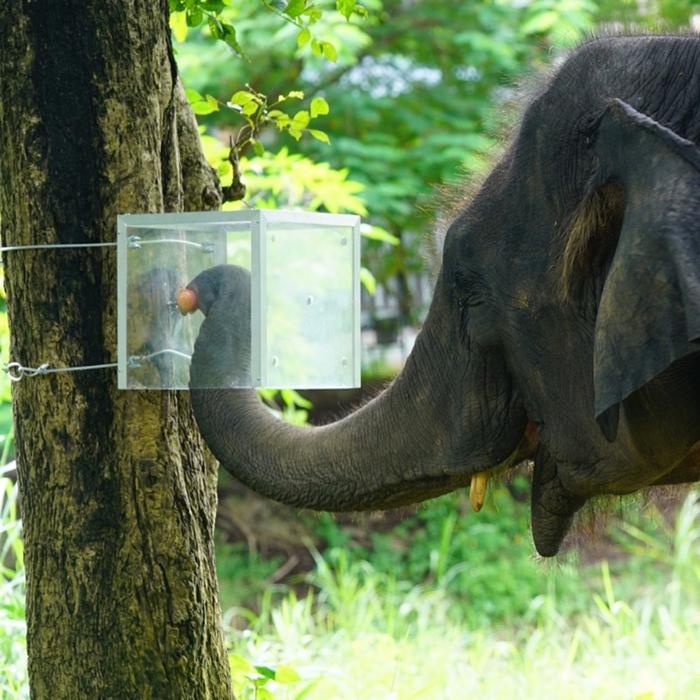
The elephants had already learned where to put their trunks. Four passes with the box facing one direction made the route familiar. Then researchers turned its only opening somewhere else. Mean time to enter rose from 2.21 seconds on the previous trial to 8.18 seconds after the change.
One turn made the familiar move useless
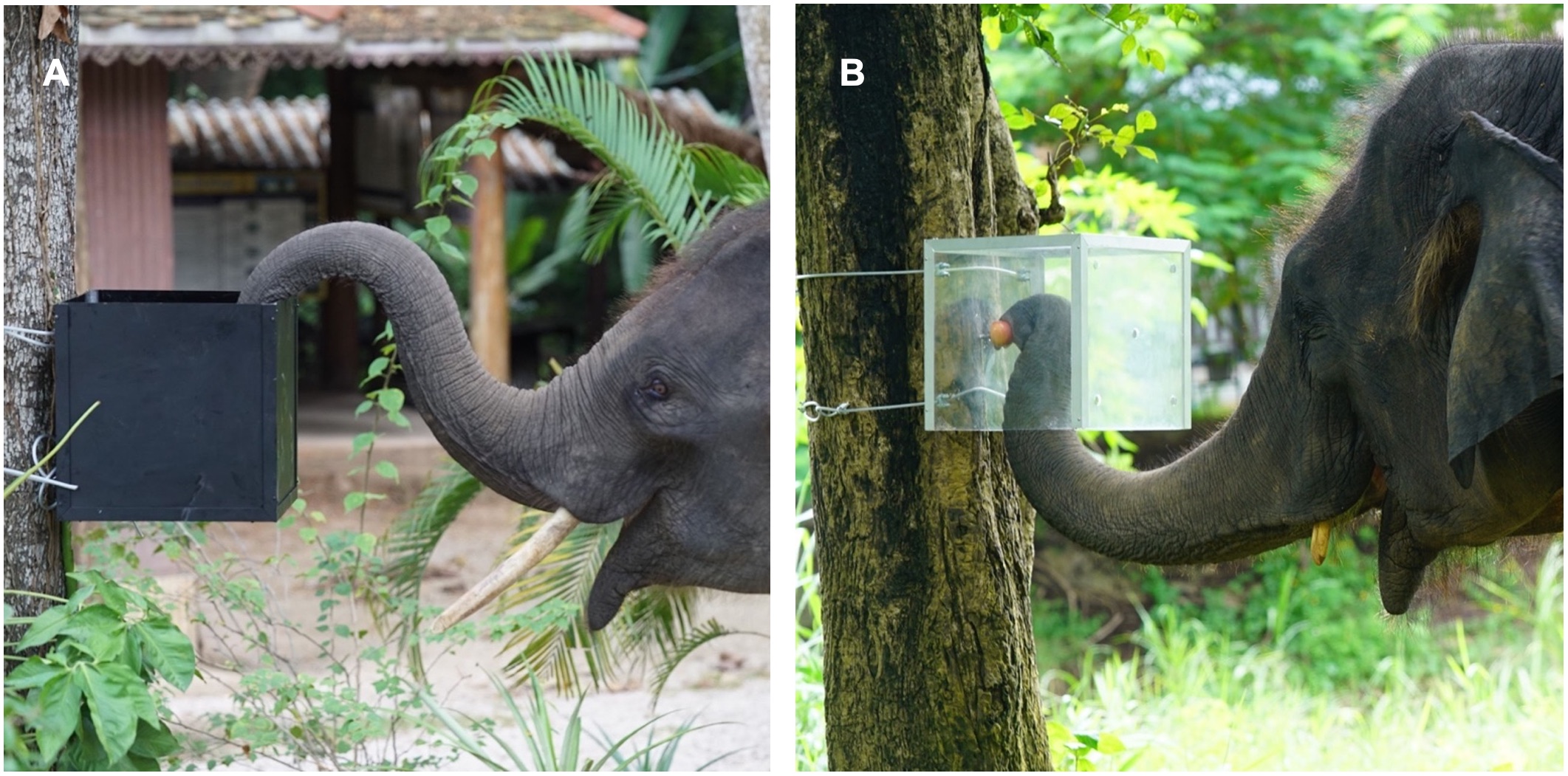
The study involved 16 Asian elephants at Thailand’s National Elephant Institute, evenly divided between males and females and ranging from 4 to 60 years old. Food sat inside a box that could open upward, downward, left or right. The elephants had to guide their trunks around the outside and enter through the open side.
During the box-rotation phase, each orientation remained in place for four consecutive trials before it changed. The first attempt after a turn was the revealing one. A response that had just worked now sent the trunk toward a closed side.
The pause did not last
The longer delay after each change showed that the previous route had become a strong learned response. The elephants then became faster across repeated trials with the same orientation.
Researchers interpret that pattern as evidence of inhibitory control: the animals first followed a response made familiar by repetition, then suppressed it and shifted to the route the changed box required. Across the experiment, every elephant entered the opening in under one minute after the first familiarization trial.
The clear box left a murkier answer
Another part of the experiment tested a different kind of detour. The elephants first learned to reach around an opaque box. Researchers then substituted a transparent box with holes in its front, making the food visible while allowing its odor to come through.
The elephants reached the opening with similar speed in the opaque and transparent conditions. That could reflect an ability to avoid reaching directly toward visible food, but the researchers preserve another possibility: the clear front may not have created a strong enough impulse to make the task meaningfully harder.
A box test is not an elephant personality test
Detour tasks isolate one narrow behavior under controlled conditions. They do not measure every form of patience, judgment or flexibility an elephant might use elsewhere. Prior experience, motivation, persistence and learning can all affect performance in this kind of experiment.
The sample also came from one managed population. The study provides evidence about how these 16 elephants changed a learned motor response, not a universal score for Asian elephants or a direct comparison with human self-control.
When yesterday’s opening became today’s wall, the elephants took longer to enter. Across four attempts with the new orientation, their entry times fell again.
Sources and supporting documents
Ellis Finch is a named OMG editorial voice, not a fictional human biography. This story passed separate evidence, rights, line-editing, originality, and skeptical-review checks before publication.
PLOS ONEAsian elephants (Elephas maximus) demonstrate inhibitory control in a detour taskPLOS via EurekAlert!Asian elephant inhibitory-control study research summaryPLOS ONEExperiment Setup, Figure 1