An eclipse at 50,000 feet
A NASA jet flew into the Moon’s shadow and caught three planets in one darkened sky
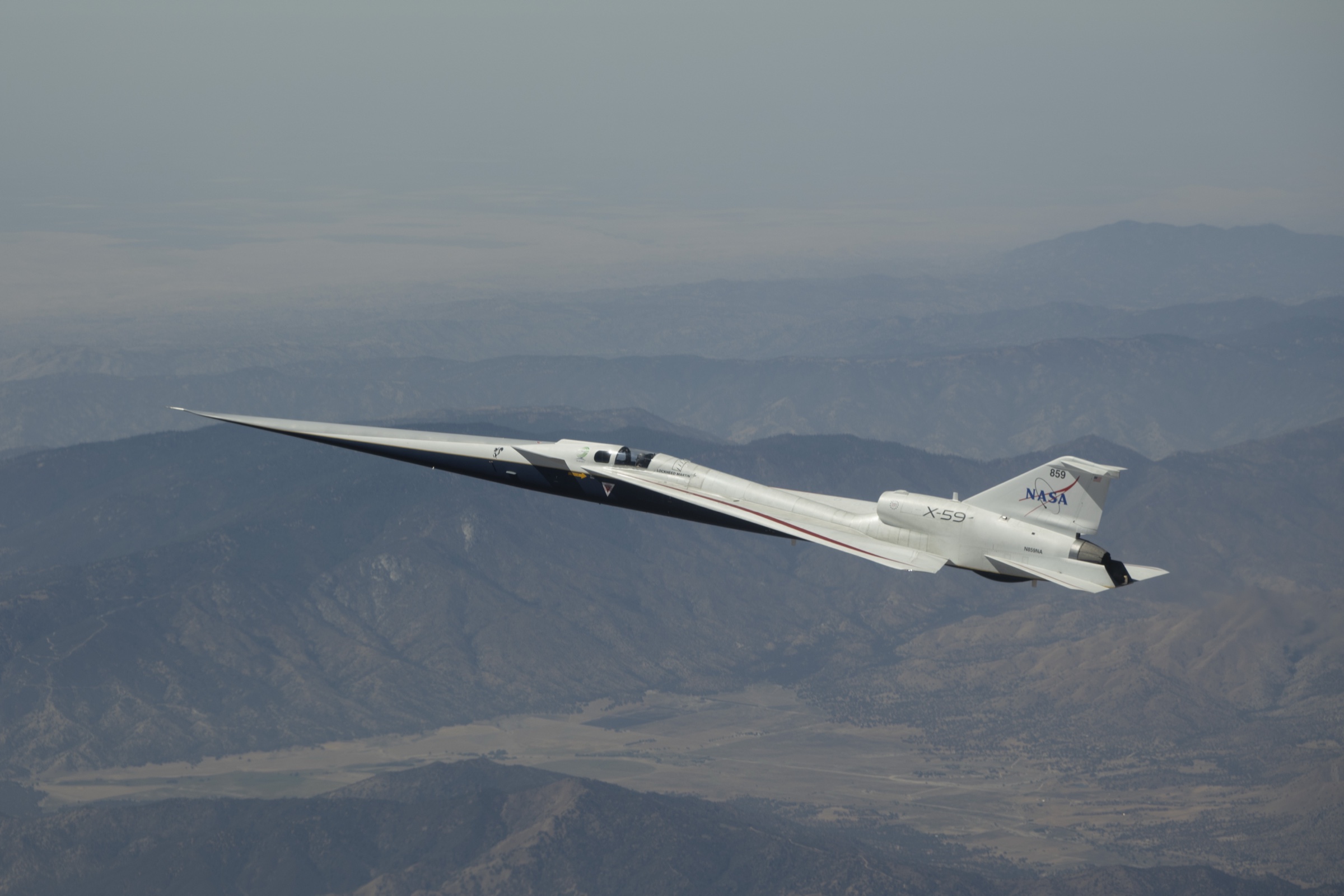
The frame looks effortless. The flight behind it required a research jet to meet a fast-moving shadow over the North Atlantic.
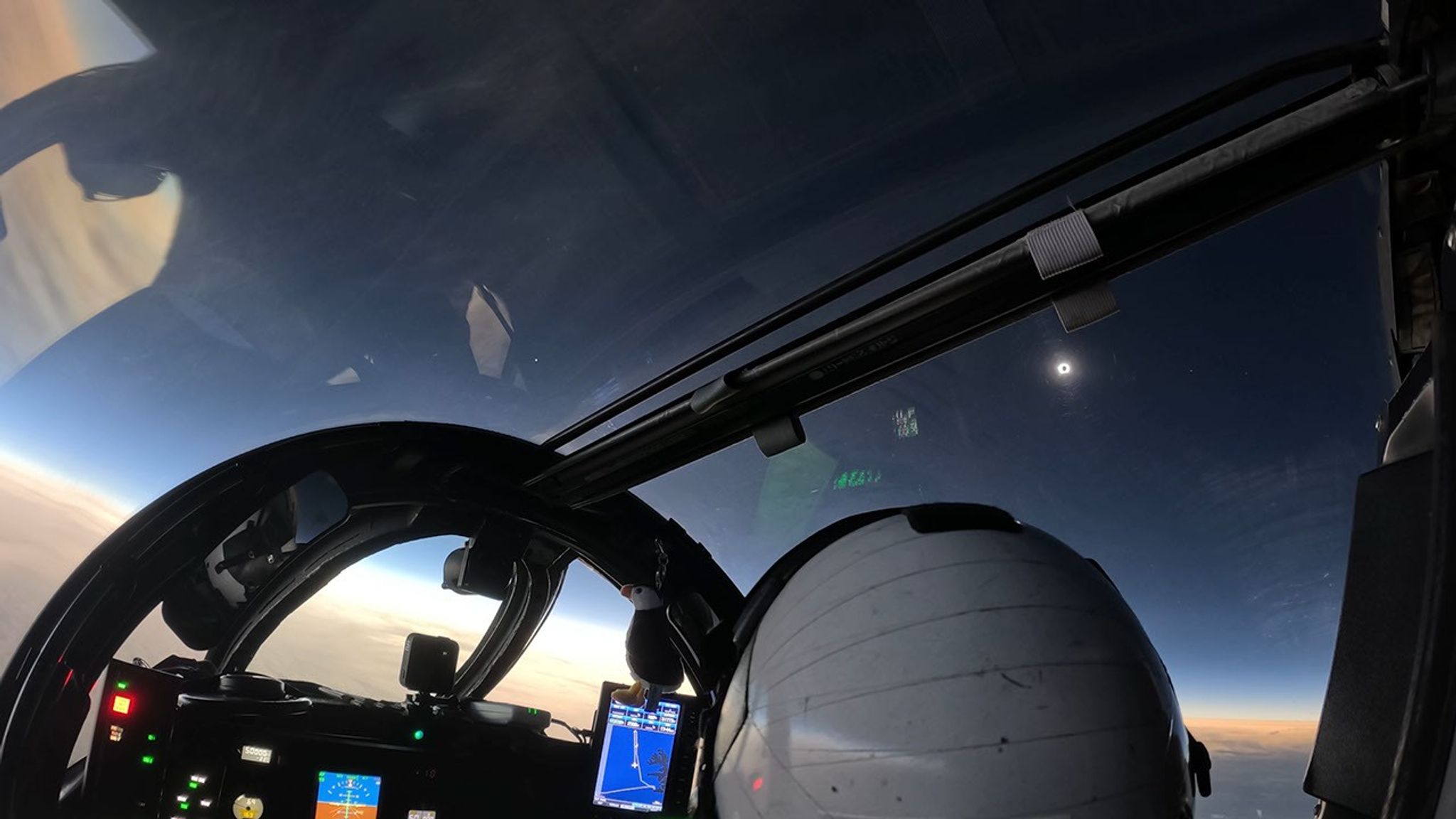
The Sun had gone black above the North Atlantic, but the rest of the frame refused to disappear. Venus shone to the left. Jupiter and Mercury surfaced to the right. Far below, the horizon remained bright where the Moon’s racing shadow no longer reached.
The cockpit view held much more than an eclipse
NASA selected the frame as its Astronomy Picture of the Day for September 5. It was taken from an inflight video aboard a WB-57F high-altitude research aircraft during the August 12 total solar eclipse.
At the center is the dark disk of the Moon with the Sun’s corona beginning to appear around it. Venus is the brightest point left of center. NASA identifies Jupiter and Mercury as the fainter points to the right.
The lower edge changes the scale of the scene. Daylight still touches the distant horizon outside the shadow, while the aircraft and everything above it sit under an abruptly dark sky.
The crew had to meet a shadow moving across the ocean
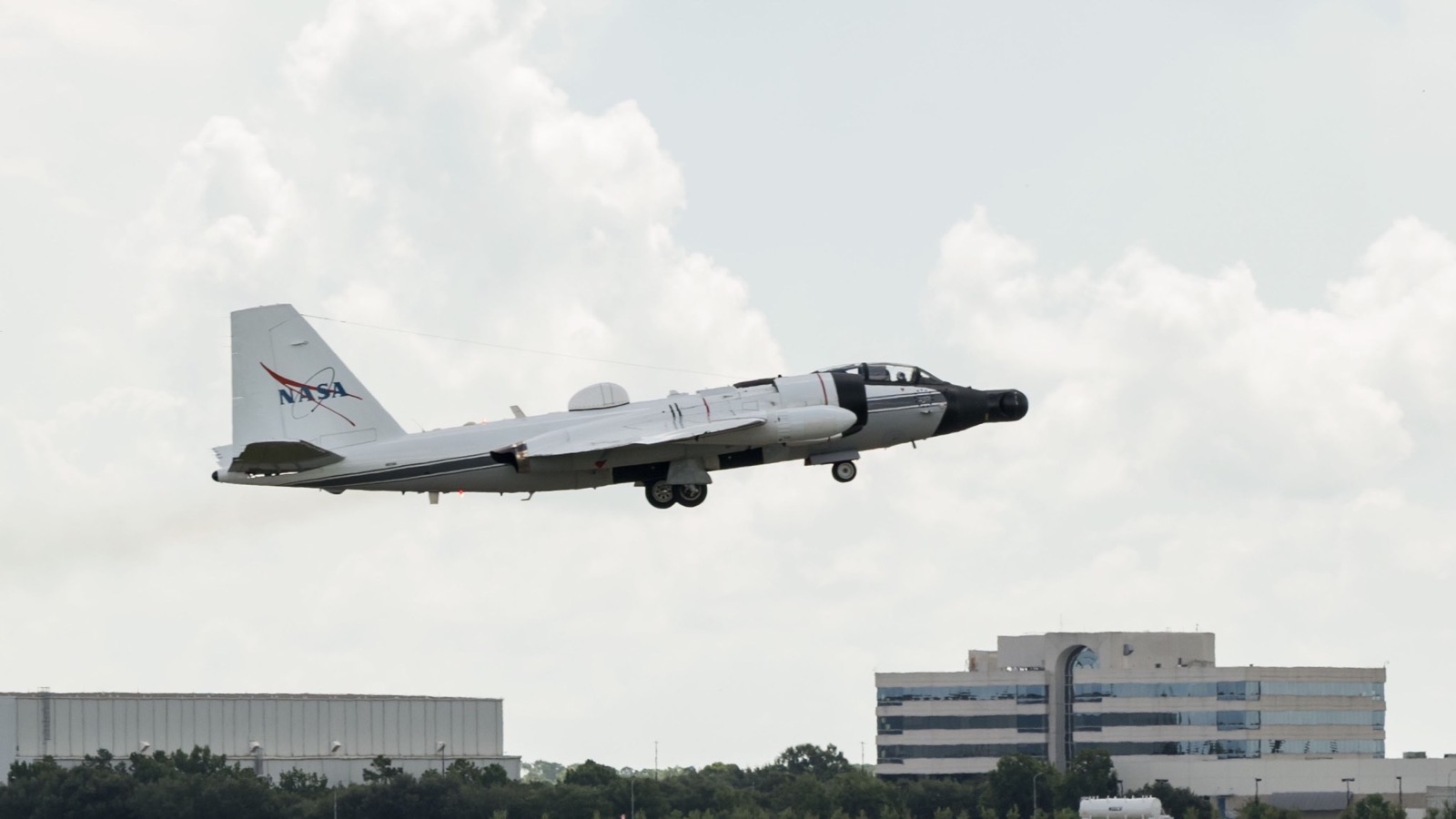
The aircraft operated from Iceland, near an eclipse path that crossed much of the North Atlantic. Teams calculated where the WB-57 needed to be when the shadow arrived, then pilot John Gustine guided the jet along the path of totality to maximize the observing time.
The jet was more than a camera platform above the clouds. Its position and direction were part of the observation.
At 50,000 feet, the atmosphere got out of the way
The WB-57 flew at roughly 50,000 feet. That placed its cameras above most of the clouds, dust, and water vapor that complicate observations closer to the ground.
Altitude also opened a window into infrared wavelengths that are largely absorbed lower in Earth’s atmosphere. The aircraft carried a suite of high-resolution cameras designed to collect more than the visible-light cockpit view now circulating online.
The eclipse helped in a different way. By blocking the Sun’s brilliant visible surface, the Moon exposed the much fainter corona around it.
The cameras still needed a person in the back seat
Sensor equipment operator Cary Klemm controlled the camera systems from the rear seat. NASA says he adjusted focus and exposure times while following features during totality.
The mission was designed to investigate how energy and material move through the corona, including the enduring question of why that outer atmosphere is far hotter than the Sun’s visible surface.
The image delivers its drama immediately; the science will take longer. It captures a research jet inside the Moon’s shadow, with three planets in the darkened sky and daylight still glowing along the horizon beyond it.
Sources and supporting documents
Nora Signal is a named OMG editorial voice, not a fictional human biography. This story passed separate evidence, rights, line-editing, originality, and skeptical-review checks before publication.
NASA ScienceAPOD: Chasing the Moon’s ShadowNASANASA Johnson pilots chase Moon’s shadow for eclipse scienceNASA Scientific Visualization Studio2026 Total Solar Eclipse Imagery: Science ExperimentsNASANASA Images and Media Usage Guidelines