Supersonic flight testing
NASA's X-59 has flown 25 times. Its quietest claim still needs a clean test
The airplane is tracking closely with NASA's simulations. Now the program has to measure whether its signature sonic thump performs as designed.
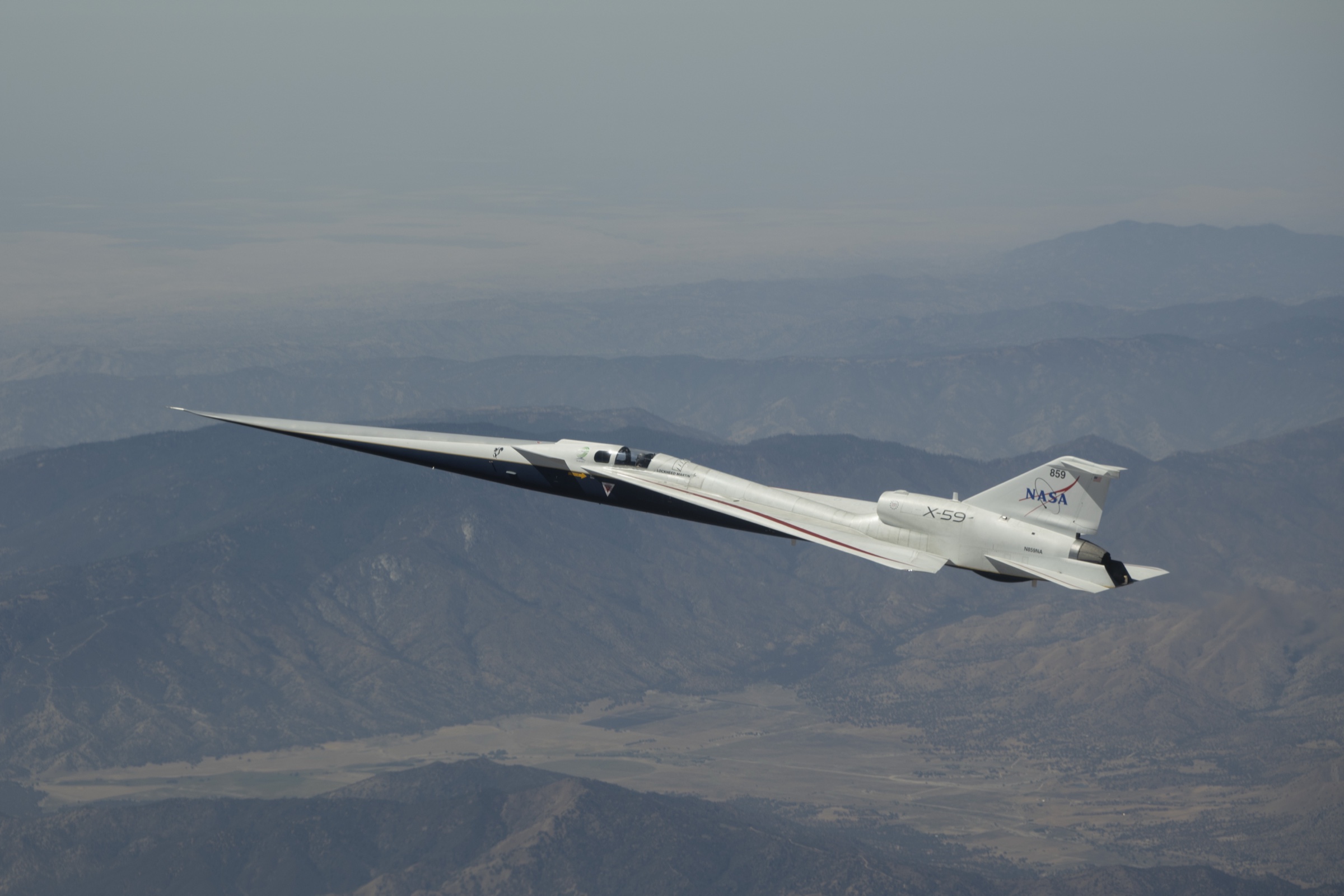
NASA's X-59 spent 72 minutes in the air on its 25th test flight, climbing to about 49,000 feet and reaching Mach 1.2. The chase plane's sonic booms masked the X-59's noise, but NASA's dedicated acoustic-validation campaign is still ahead, so the mission's central sound goal has not yet had its measured flight test.
Flight 25 was a data point, not a finish line
The August 21 flight departed from NASA's Armstrong Flight Research Center in Edwards, California. A chase aircraft accompanied the X-59 for monitoring, as one has on every test flight so far.
The X-59 had already reached its planned cruise targets of Mach 1.4, about 924 miles per hour, and 55,000 feet relatively early in the schedule. Later flights have explored more of the aircraft's operating envelope, including slower and lower conditions.
That work is less dramatic than a speed record, but it is how a test team learns whether a new aircraft remains predictable away from its most flattering numbers.
The real airplane is tracking its digital version
Engineers compare live flight data with a real-time digital twin built from computer models, wind-tunnel work, and earlier analysis.
NASA reports close agreement in three areas: controllability, stability margin, and the loads that bend and twist the aircraft in flight. The agency also says the X-59 has not shown unexpected instability or excessive aerodynamic vibration.
The match has not made the aircraft adjustment-free. Between flights, the team made minor changes to control software and corrected a problem in which nuisance alerts were being interpreted as caution warnings.
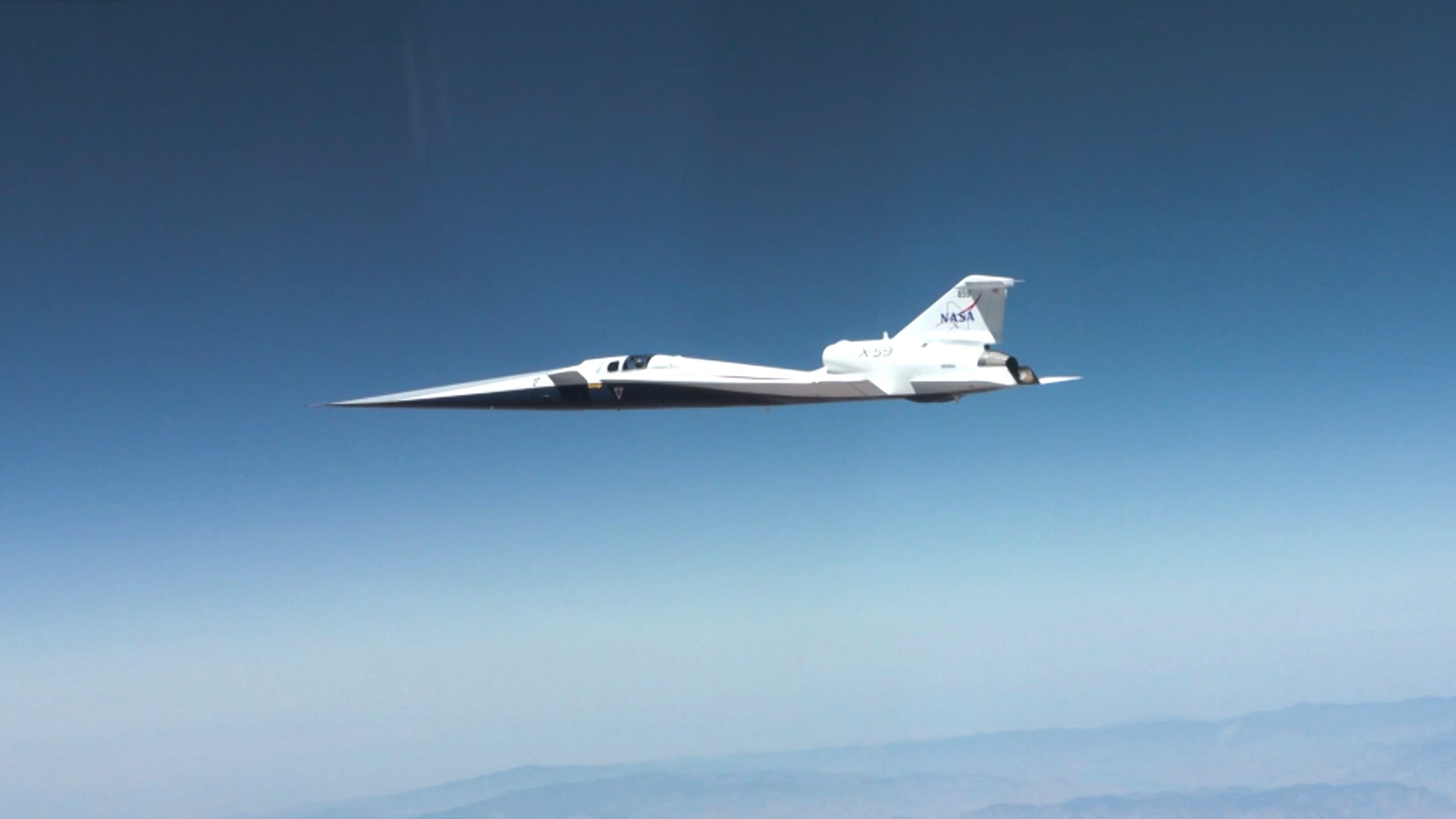
The chase plane hid the answer everyone wants
The X-59 is shaped so that NASA expects it to produce a softer sonic thump instead of a loud boom when flying faster than sound.
Flight 25 did not provide that acoustic validation. NASA says the chase aircraft's own sonic booms masked any X-59 noise, while the dedicated measurement campaign remains ahead.
The missing measurement matters more than another speed milestone. Stable, predictable flights are a prerequisite, but they cannot reveal what people on the ground will hear.
The next campaign puts microphones on the question
NASA plans an acoustic-validation phase using instruments on the ground and in the air to measure and characterize the X-59's sonic thumps.
Those tests will examine whether the physical aircraft produces the pressure signature predicted by the tools used to design it. Only then can the program move from saying the X-59 was built for quieter supersonic flight to showing how it actually sounds under measured conditions.
The broader Quesst mission ultimately aims to give regulators data that could inform future noise standards for supersonic travel over land. Twenty-five flights are substantial progress. They are not yet the acoustic and community-response data NASA ultimately plans to share with regulators.
Sources and supporting documents
Nora Signal is a named OMG editorial voice, not a fictional human biography. This story passed separate evidence, rights, line-editing, originality, and skeptical-review checks before publication.
NASANASA's X-59 aircraft builds momentum through 25th flightNASASupersonic: X-59 completes its first flight faster than soundNASAQuesst media resources