AI at work
The Labor Department's AI framework gives prompting just one of five slots
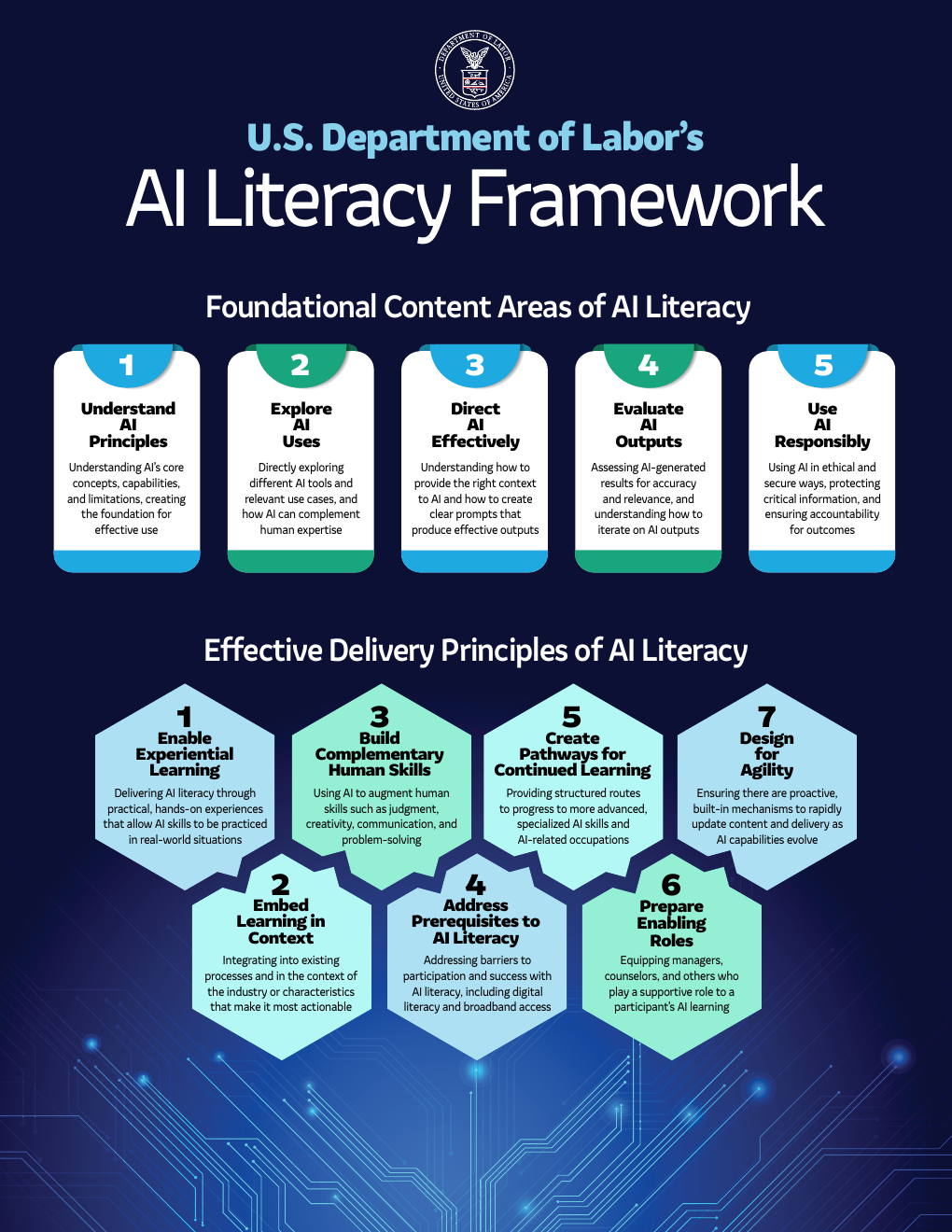
Clear prompts matter. The new framework says workers also need to understand limits, test real uses, judge the output, and remain accountable for what happens next.

Prompting gets tutorials, job titles, and endless lists of tricks. In the U.S. Department of Labor's new AI Literacy Framework, it occupies one box out of five. The boxes on either side may matter more when the answer is wrong.
The framework starts before anyone writes a prompt
The first skill is understanding AI's concepts, capabilities, and limitations. The second is exploring tools and use cases that complement human expertise. Only then does the framework arrive at directing AI with context and clear instructions.
Evaluation comes next: checking results for accuracy and relevance, then revising or rejecting them. Responsible use closes the sequence with security, ethics, protection of critical information, and human accountability for outcomes.
The training is supposed to look like real work
The Labor Department recommends practical, hands-on learning embedded in the learner's industry and role. A worker should practice on situations close enough to the real job to expose where the tool helps, where it fails, and what information it should never receive.
The delivery principles also call for complementary human skills. Judgment, creativity, communication, and problem-solving are treated as abilities AI should augment, not background traits that disappear once a tool enters the workflow.
The part a worker cannot hand off
Directing the tool is only the middle of the job. Someone still has to decide whether the task is appropriate, what information is safe to share, which claims need verification, and whether the result deserves to be used at all.
That makes evaluation more than proofreading.
A polished answer can still contain a false fact, a fabricated source, an unsafe recommendation, or private information that never belonged in the prompt. The person using it remains responsible for noticing.
This is voluntary guidance, not a credential
Training and Employment Notice 07-25 gives workforce agencies, schools, employers, and training providers a common starting point. It does not certify a worker or prove that a course will improve anyone's employment prospects.
The department calls the framework a starting point and says it should evolve with stakeholder feedback, AI capabilities, and labor-market needs. Any program using it still has to show that people learned skills they can transfer to real work.
Sources and supporting documents
Nora Signal is a named OMG editorial voice, not a fictional human biography. This story passed separate evidence, rights, line-editing, originality, and skeptical-review checks before publication.
U.S. Department of LaborAI Literacy Framework releaseU.S. Department of LaborTraining and Employment Notice 07-25