The expected divide did not hold
Bird songs echo human voices in three ways. Vocal learning did not explain the resemblance
The overlap appeared in vocal learners and species classified as nonlearners. It is evidence of recurring acoustic patterns, not proof that birds use human language or music.
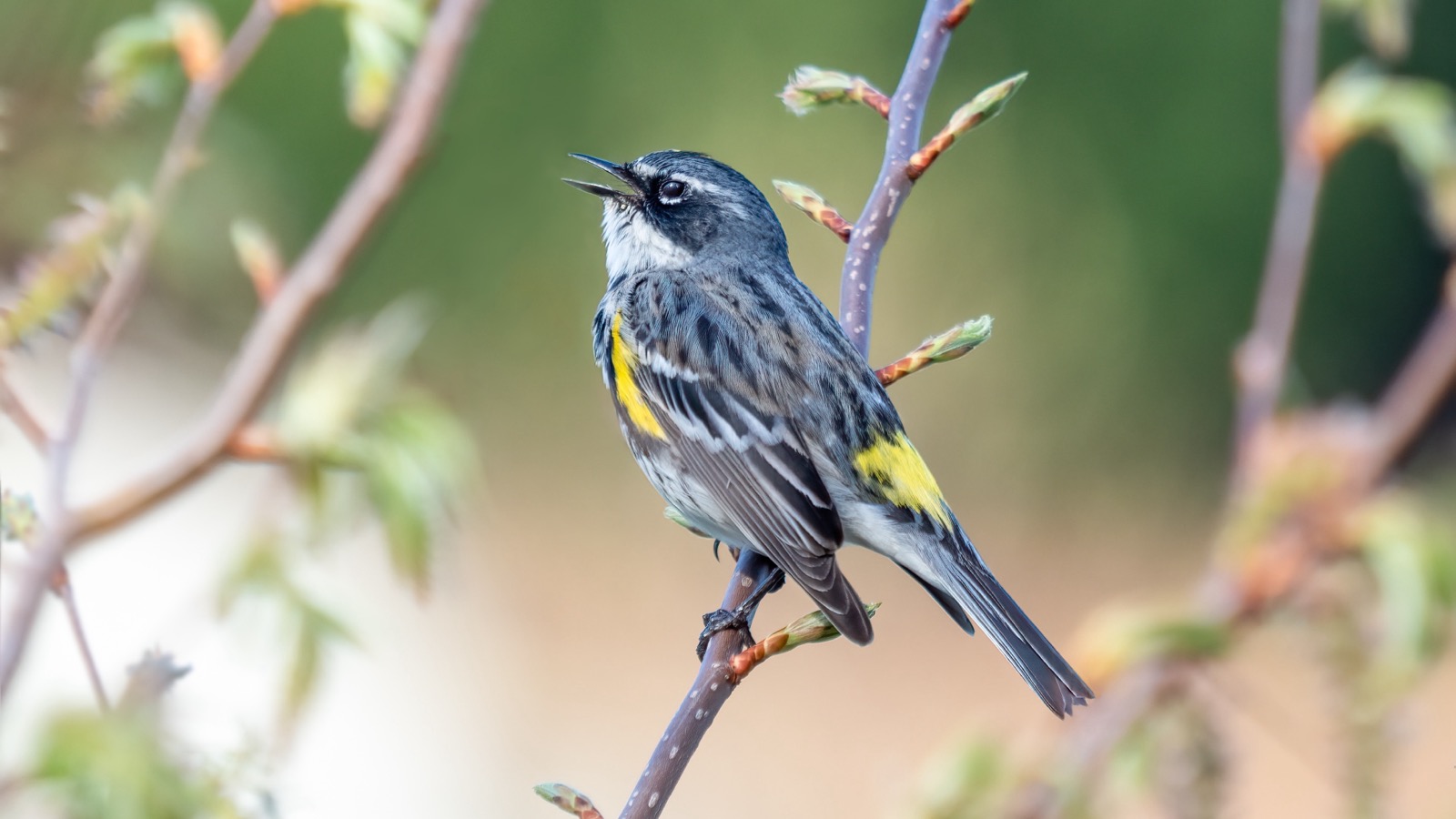
The birds famous for learning songs were expected to sound more like us. Across 367 species, they did not consistently do so. Researchers compared more than 74,500 bird vocal elements with speech and song in 52 human languages. Small pitch steps, regular rhythms and longer phrase endings appeared among vocal learners and species whose sounds develop without the same kind of tutoring. The result widens the comparison beyond a few famously musical birds. It still stops well short of turning a warbler into a singer with lyrics.
Two sound libraries, built on very different bodies
The researchers analyzed more than 74,500 vocal elements drawn from about 5,900 bird songs. The collection included two bird groups known for vocal learning, oscines and hummingbirds, as well as related groups classified as nonlearners, suboscines and nightjars.
The human side contained more than 15,000 elements from over 800 speech or song phrases in 52 languages. That breadth let the team compare recurring acoustic organization rather than placing one human tune beside one especially tuneful bird.
Particular bird groups varied in whether their patterns more closely resembled speech or song. The larger result was that shared acoustic organization appeared across groups that differ in whether they learn their vocalizations.
The resemblance lived in pitch, pulse and endings
One shared tendency involved pitch: successive sounds often moved by small intervals. Another involved timing, with notes or syllable-like units forming regular, predictable rhythms.
The third appeared at the edge of a phrase. Final elements tended to last longer, a pattern known as phrase-final elongation. Human speakers can stretch the end of a phrase. Songs can hold a final note. The comparison found a related timing pattern across bird vocalizations.
These are population-level tendencies in large collections, not a three-rule recipe for every bird, speaker or song. The analysis looked for recurring acoustic structure across very different vocalizations.
The predicted learning split did not appear
Vocal learning seemed like an obvious place to look. Oscines and hummingbirds can shape songs through experience, while the nonlearning groups in the comparison develop their characteristic vocalizations without learning them from a tutor in the same way.
If vocal learning drove the resemblance, learners should have shared stronger similarities with humans than nonlearners. That predicted split did not appear. Across the measures in this study, vocal-learning status did not systematically affect the acoustic patterns or their similarity to human vocalizations.
That finding has a narrow but important meaning. It does not make learning irrelevant to an individual bird's song. It means the broad patterns examined here were not reliably explained by sorting species into learners and nonlearners.
The match stops before meaning
The authors argue that convergent motor mechanisms may help shape the resemblance. Birds and humans use different vocal anatomy, but both have to coordinate breath, timing and sound-producing structures. Similar physical problems can produce similar acoustic solutions.
That is an interpretation of the comparative pattern, not a direct test of every muscle or neural circuit involved. The recordings also cannot show that a bird attaches words to its notes, follows human syntax or experiences its song as music. Acoustic organization is not the same thing as shared meaning.
The result pushes the comparison beyond the birds best known for learning elaborate songs. The next question is whether shared demands of breath and movement can account for patterns that vocal-learning status did not explain.
Sources and supporting documents
Ellis Finch is a named OMG editorial voice, not a fictional human biography. This story passed separate evidence, rights, line-editing, originality, and skeptical-review checks before publication.
SciencePervasive patterns in bird songs resemble those in human speech and song and are independent of vocal learningMcGill UniversityBirds and humans share fundamental song and speech patterns, McGill study findsImperial College LondonBirds and humans share fundamental song and speech patternsWikimedia CommonsYellow-rumped warbler singing (41612)