A thousand pieces of starlight
This 10-metric-ton-plus instrument can sort light from about 1,000 cosmic targets at once
The two infrared cameras in ESO’s new photograph sit at the end of a system built to collect nearly 1,000 spectra in one observation. First Light is complete, but commissioning is not.
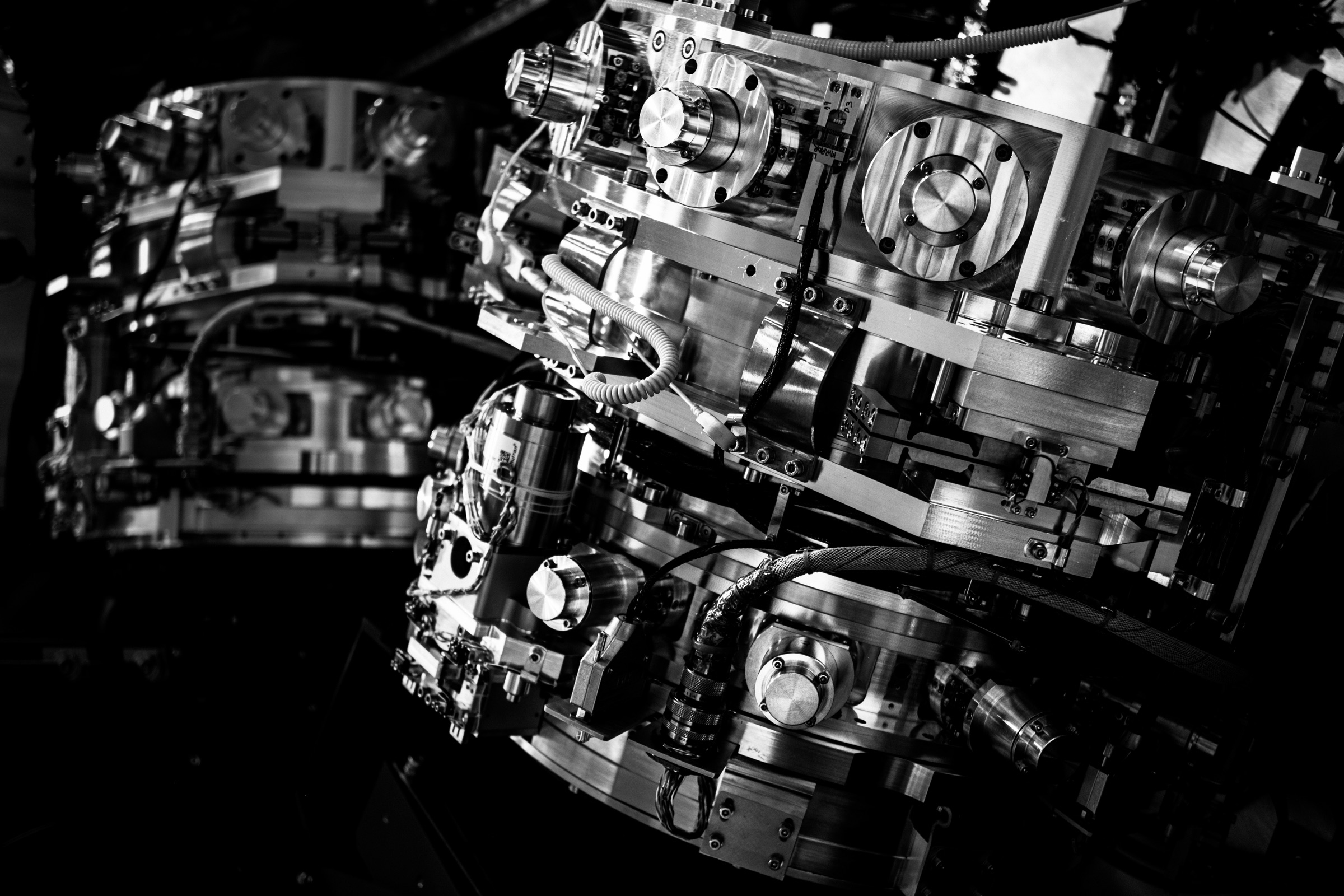
Two tiered metal assemblies hang in darkness, their rings and bolts picked out in silver. They are infrared cameras at the far end of MOONS, an instrument built to collect spectra from about 1,000 stars or galaxies in one observation. The machine around them weighs more than 10 metric tons and takes 5,000 liters of liquid nitrogen to cool.
One observation begins with about 1,000 appointments
MOONS uses around 1,000 optical fibers, each mounted on a robotic positioner. For one observation, the system aims individual fibers at stars or galaxies spread across the telescope’s field of view. UK ATC says the fiber tips can be placed with micrometer accuracy.
Each fiber carries one target’s light onward, allowing the instrument to collect nearly 1,000 spectra at once instead of working through the targets one by one. The figure describes capacity, not a guarantee of 1,000 usable spectra in every exposure.
The fibers end in two artificial rainbows
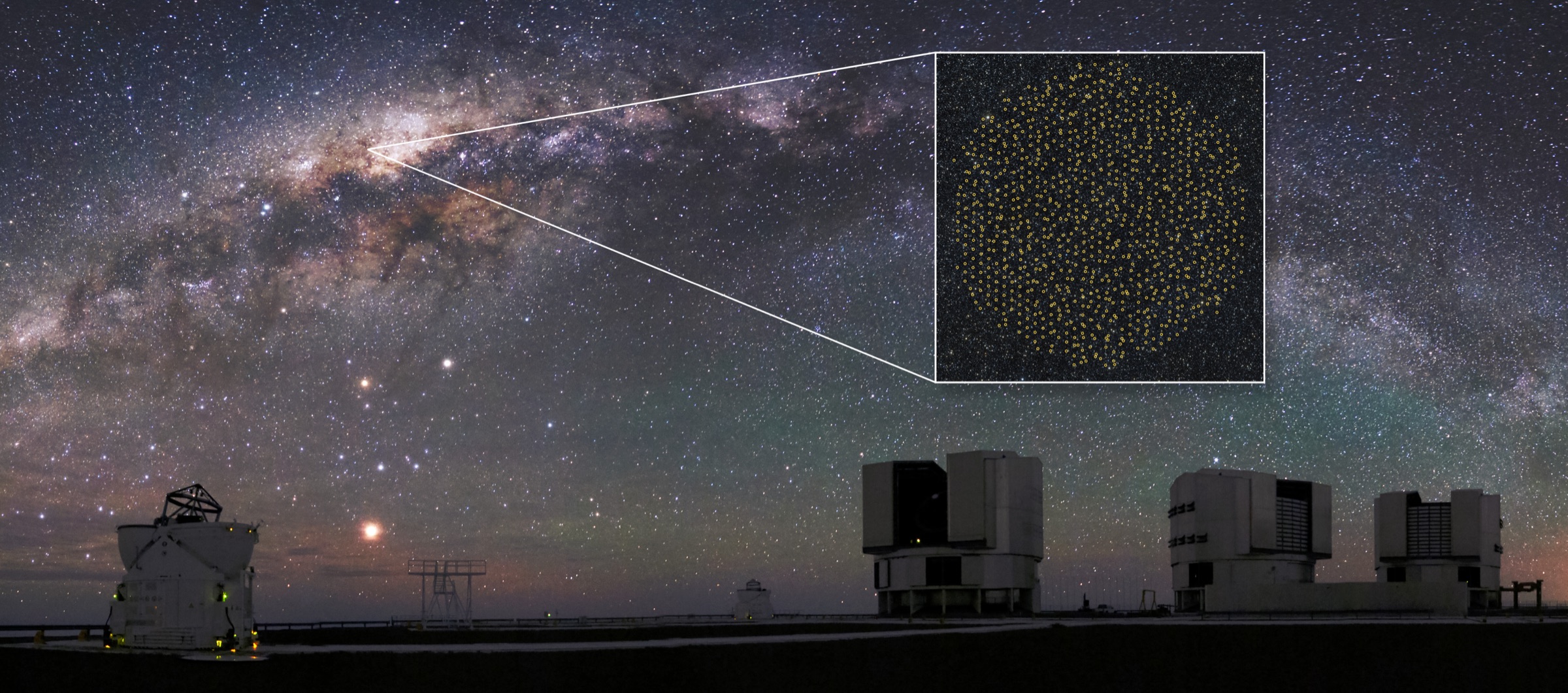
MOONS, short for Multi-Object Optical and Near-infrared Spectrograph, is installed on Unit Telescope 1 of ESO’s Very Large Telescope in northern Chile. Its fibers divide between two identical spectrographs, roughly 500 to each instrument.
Each spectrograph separates incoming light into wavelengths, much as a prism spreads light into a rainbow. Cameras like the two in ESO’s photograph detect the result.
The output is a spectrum, not a conventional portrait. From its pattern, astronomers can infer properties such as chemical composition, mass, and motion.
Infrared astronomy created a 10-ton refrigeration problem
Heat from an infrared instrument’s own surroundings can contaminate the faint signal it is trying to measure. MOONS houses its spectrographs in a cryostat that keeps components between about minus 143 and minus 233 degrees Celsius.
The instrument is 4.5 meters tall and weighs more than 10 metric tons. Cooling its cryostat takes 5,000 liters of liquid nitrogen.
First Light reached through the Milky Way’s dust
MOONS made its first observations toward the obscured plane of the Milky Way. Its first field included Baade’s Window, a densely populated direction toward the galactic center.
Dust blocks much of the visible light from that region. Infrared wavelengths pass through more of it, allowing MOONS to study stars that are difficult to reach in visible light alone.
First Light showed that the instrument could take astronomical data. Commissioning and calibration still come next. Only then does full science begin, with ESO projecting observations of as many as 10 million objects over the instrument’s ten-year design life.
Sources and supporting documents
Nora Signal is a named OMG editorial voice, not a fictional human biography. This story passed separate evidence, rights, line-editing, originality, and skeptical-review checks before publication.
European Southern ObservatoryIt’s a new MOON(S)!European Southern ObservatoryRevealing hidden stars and galaxies: new MOONS instrument at the Very Large Telescope makes first observationsUK Astronomy Technology CentreA thousand eyes on the Universe: MOONS takes first look into the heart of the Milky WayEuropean Southern ObservatoryMOONS first light observationsEuropean Southern ObservatoryUsage of images, videos, music and web texts