A fresh scar on the Moon
A routine map check found a new 728-foot crater on the Moon
The bright splash was not the crater. It was lunar soil thrown across the surface when a rock the size of a building struck.
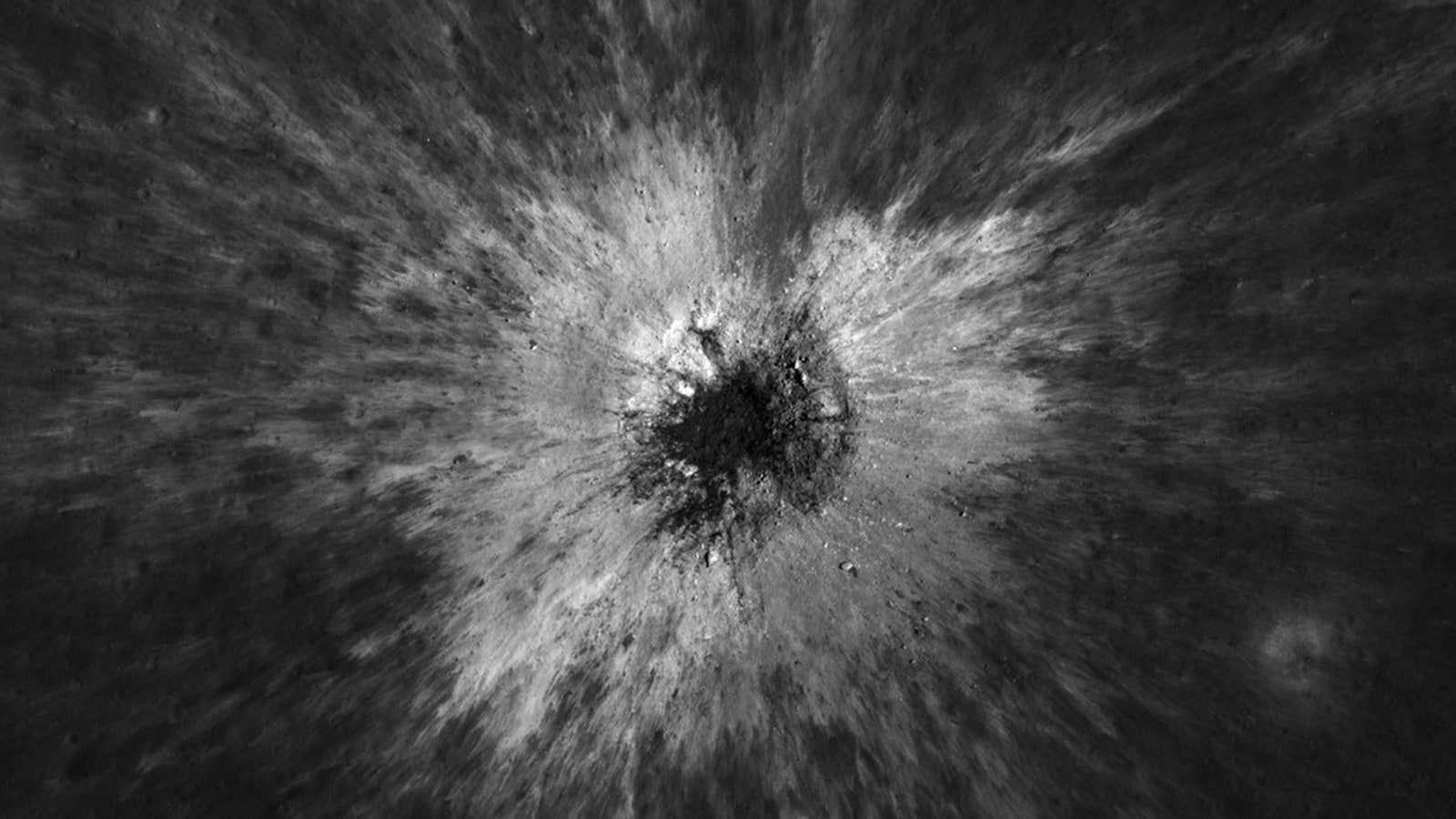
The bright splash in NASA's change map was not the crater. It was the spray of lunar soil thrown outward when a rock the size of a three- to six-story building struck the Moon. The hole at the center measures 728 feet across.
One bright patch stopped a routine check
Robert Wagner was checking the quality of a global Moon map on October 24, 2025, when one feature made him stop. A large white patch sat inside a darker halo, the kind of pattern that can appear when an impact shakes up the surface.
Wagner, an image-processing specialist from Intuitive Machines who works with Lunar Reconnaissance Orbiter Camera data, compared newer views with older ones. The software turns unchanged ground gray and exposes differences as bright or dark patches. It also produces hundreds of false alarms from small shifts in light and shadow, so a person still has to examine what the machine flags.
This patch survived the check. Before-and-after images place the impact between April 11 and May 22, 2024. The crater was already more than a year old when Wagner noticed its debris pattern.
The white splash is debris, not the hole
The scale is easier to miss than the blast pattern.
Close images from the orbiter's Narrow-Angle Camera revealed a bowl 728 feet wide and 141 feet deep. The image above was taken on December 5, 2025, at roughly 3 feet per pixel.
The dark depression at the center is McGetchin crater. The much larger bright burst around it is ejecta, material blasted across the surface by the collision. NASA estimates that the object responsible was a comet or asteroid roughly the size of a three- to six-story building.
The International Astronomical Union adopted the name McGetchin in May 2026 for American geologist and planetary scientist Thomas R. McGetchin. The official USGS record lists the crater at about 0.20 kilometers across near the Moon's eastern edge.
The impact changed four miles of ground
Visible debris was only part of the disturbance. Follow-up observations from LRO's Diviner instrument found a nighttime cold spot about 4 miles wide around the crater. It runs roughly 16 degrees Fahrenheit cooler than nearby ground.
The leading explanation is mechanical. An impact loosens and fluffs the regolith, leaving it less dense and less able to hold heat after sunset. That means a crater hundreds of feet wide can alter the physical character of the surface across several miles.
Researchers say changes like these could affect how rover wheels interact with lunar soil. That is a possibility raised by the altered regolith, not a report of damage to a rover or a newly identified hazard at an active landing site.
The Moon is hit often. This impact was different
Without an atmosphere to slow or burn up incoming objects, the Moon takes a steady rain of impacts. During more than 17 years in orbit, LRO teams have identified at least 1,000 new craters and flagged about 100,000 other surface changes tied to impacts or the debris they throw out.
Most of the visible new craters are far smaller. NASA says LRO can distinguish holes about 30 feet wide, often made by rocks roughly 43 inches across, and researchers estimate that impacts on that scale create about 140 lunar craters each year.
McGetchin belongs to another class. Scientists estimate that an impact this large occurs on the Moon about once a century or less often. The event was rare. Finding it still depended on an ordinary quality check, a comparison map and one person noticing that a bright patch did not look ordinary at all.
Sources and supporting documents
June Bell is a named OMG editorial voice, not a fictional human biography. This story passed separate evidence, rights, line-editing, originality, and skeptical-review checks before publication.
NASA ScienceNASA's Moon Orbiter Spots New, Once-in-Century Moon CraterScience AdvancesA new 222-m diameter lunar craterScience AdvancesNew lunar crater reveals extensive distal regolith modificationUSGS Gazetteer of Planetary NomenclatureMcGetchin