A monument’s microscopic address
Tiny mineral grains traced Yorkshire’s Devil’s Arrows to rocks 11 miles away
The source is now supported by geological evidence. The route, transport method and reason for choosing that distant landscape remain unanswered.
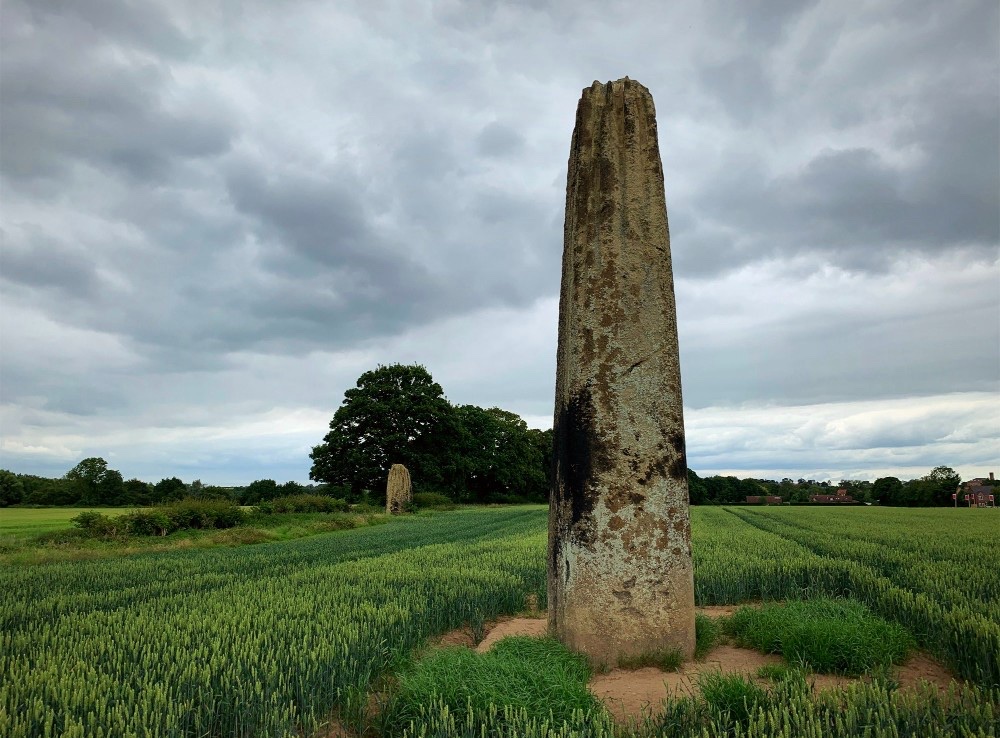
A strip of adhesive tape lifted grains small enough to hide against the weathered surface of a standing stone. Inside them, researchers found a geological address. The Devil’s Arrows near Boroughbridge matched Brimham Rocks, 18 kilometers to the west, rather than the nearer gritstone sources around the monument.
The sample barely looked like a sample
The three surviving pillars could not be treated like spare pieces of laboratory rock. Researchers used a low-impact adhesive method to collect microscopic material from their surfaces, avoiding a conventional rock chip.
They examined zircon and apatite grains within that material. The ages recorded by those minerals form a distinctive pattern that can be compared with candidate rock sources across the region.
The fingerprint pointed beyond the nearest stone
The match led to the Millstone Grit outcrops at Brimham Rocks, about 18 kilometers, or 11 miles, west of the monument. The nearest gritstone outcrops are roughly 5 kilometers away, while Plumpton Rocks, a previously suspected source, lies about 13 kilometers away.
That distance matters because the result is not simply a broad match to the kind of sandstone found across the area. The zircon and apatite age profiles connect the pillars to a particular source landscape farther away.
A glacier could not complete the trip
A matching source alone would not prove that people moved the stones. Ice can carry enormous pieces of rock and leave them far from their original outcrop.
The researchers compared the mineral result with reconstructed regional ice flow. Those reconstructions exclude glacial transport from Brimham Rocks to the site of the Arrows. Taken together, the provenance and ice-flow evidence support deliberate extraction and human transport from that distant source.
The evidence does not recover the route or transport method. It shows how far the stones traveled, not how people carried them across those 18 kilometers.
The answer is microscopic. The surviving row is not.
The three unevenly spaced pillars extend across about 174 meters near Boroughbridge. The tallest approaches 7 meters, or 23 feet, and the stones weigh more than 25 tonnes each. Historical accounts indicate that the row once contained at least five stones and probably more.
Geology now supplies a strong answer to where their stone originated. It does not identify the builders, count the people involved or reveal why Brimham Rocks mattered enough to justify passing closer sources.
Microscopic grains connect two Yorkshire landscapes. The human decisions that carried the stones between them remain out of reach.
Sources and supporting documents
Rowan Price is a named OMG editorial voice, not a fictional human biography. This story passed separate evidence, rights, line-editing, originality, and skeptical-review checks before publication.
Proceedings of the Royal Society ADeliberate prehistoric sourcing of the Devil’s Arrows, Britain’s tallest stone rowUniversity of YorkNeolithic Devil’s Arrow stones travelled 11 miles across Yorkshire, study revealsEurekAlert!Prehistoric stones in Yorkshire, known as the Devil’s Arrows