The maker is named. The trail is not.
The oldest work in a coming Smithsonian African art exhibition was made by King Lewanika
The museum names the bowl’s maker and intended purpose. Its announcement does not provide the object number or the ownership chain that brought it into the collection.
Geometric patterns run along a wooden bowl’s sides, and a carved figure rises from its lid. The National Museum of African Art says King Lewanika, a 19th-century leader of the Lozi people, made it to demonstrate the cultural power of his kingdom to foreign visitors. New & Now is scheduled to open November 6. The museum calls the bowl the oldest object in the exhibition, then stops before supplying its object number or ownership chain.
The name is clear. The object record is not.
The museum places the bowl in what is now Western Province, Zambia. It does not give the work’s dimensions, acquisition date or catalog number in the release. It also does not explain how the bowl moved from Lewanika’s kingdom into the national collection.
A separate Smithsonian catalog record describes a wooden bowl titled mukeke by Lewanika and publishes an ownership history. The exhibition announcement does not cite that record or provide an object number that would connect the two. Similar maker and object descriptions are not enough to make them the same work.
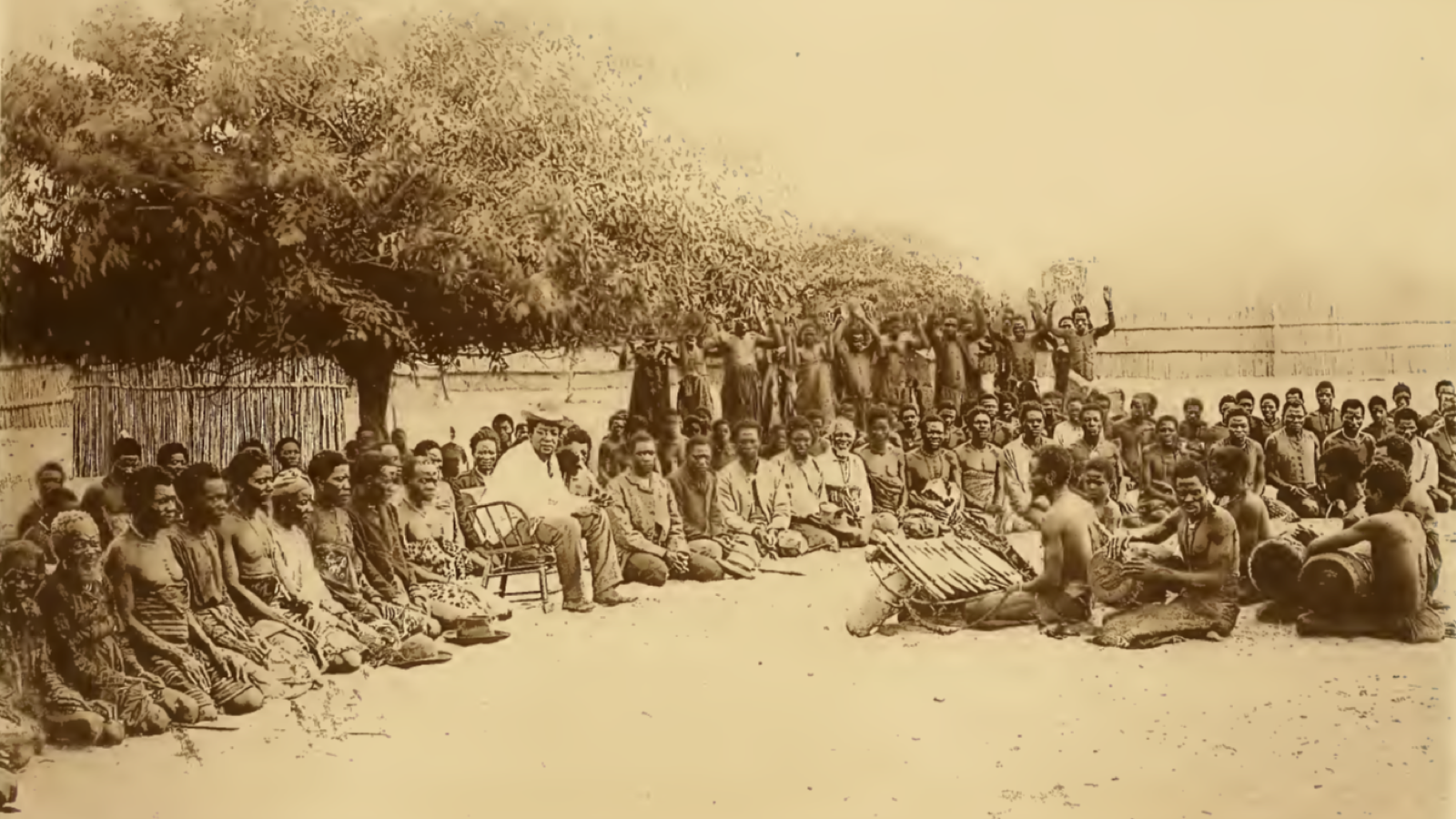
The historical image above comes from J. Johnston’s 1893 book and is described on Wikimedia Commons as Lewanika holding court in Barotseland around 1890. It offers context for the ruler and place. The bowl is not visible, and the photograph does not show the exhibition or museum.
The plan puts ownership history in the gallery
New & Now draws from works the museum acquired during the past decade. The museum says the exhibition will explain why and how it collects, including changes in how it considers object histories and ethical stewardship.
It also says noteworthy provenance will be incorporated throughout the exhibition. Provenance can identify who held an object, how it changed hands and where the record goes silent. The release does not promise a complete history for every work.
The bowl shows why that qualifier matters. Its maker and the museum’s interpretation of its purpose are public. The announcement leaves its later route unstated.
One decade of acquisitions reaches back to the 19th century
The exhibition pairs older material with contemporary work. It includes Phoebe Boswell’s drawing Notes on Lockdown: I Just Want To Be Touched Again, which the museum says reflects on the COVID-19 pandemic.
The museum also says nearly 30 African artists who presented in and around the 2026 Venice Biennale are represented in its wider collection. The release confirms six of those artists for New & Now: Adebunmi Gbadebo, Wangechi Mutu, Thania Petersen, Beya Gille Gacha, Damien Ajavon and Pamina Sebastião. The nearly 30 figure is not an exhibition count.
A royal bowl made in the 19th century and a drawing about pandemic isolation entered the museum during the same decade of collecting. The exhibition’s stated subject is the decisions that brought such different works into one national collection.
The biggest claims still come from the museum
The National Museum of African Art says it stewards nearly 13,000 objects and holds the largest publicly held collection of 20th- and 21st-century African art in the United States. The release provides no comparison method for that ranking.
Those figures establish the scale of the institution, not the quality of an exhibition that has not opened. Because the doors are still closed, the finished galleries cannot yet be independently assessed for how clearly their labels explain individual acquisitions or gaps in their records.
For now, the announcement gives Lewanika’s bowl a maker and an intended purpose, but no public ownership chain. After November 6, visitors can see which object histories the gallery supplies and where the record still stops.
Sources and supporting documents
Rowan Price is a named OMG editorial voice, not a fictional human biography. This story passed separate evidence, rights, line-editing, originality, and skeptical-review checks before publication.
Smithsonian National Museum of African ArtNational Museum of African Art Announces New & NowSmithsonian National Museum of African ArtNew & Now: A Decade Building the National Collection of African ArtWikimedia CommonsLewanika holding courtSmithsonian National Museum of African Artmukeke, object 2021-6-2