The response finally meets the original
For the first time, Yinka Shonibare’s headless figures share a room with Gainsborough’s original
A pale blank in Frances Andrews’s lap remains unsolved. Shonibare kept the couple’s poses, removed their faces and estate, and changed their clothes to Dutch wax cotton.
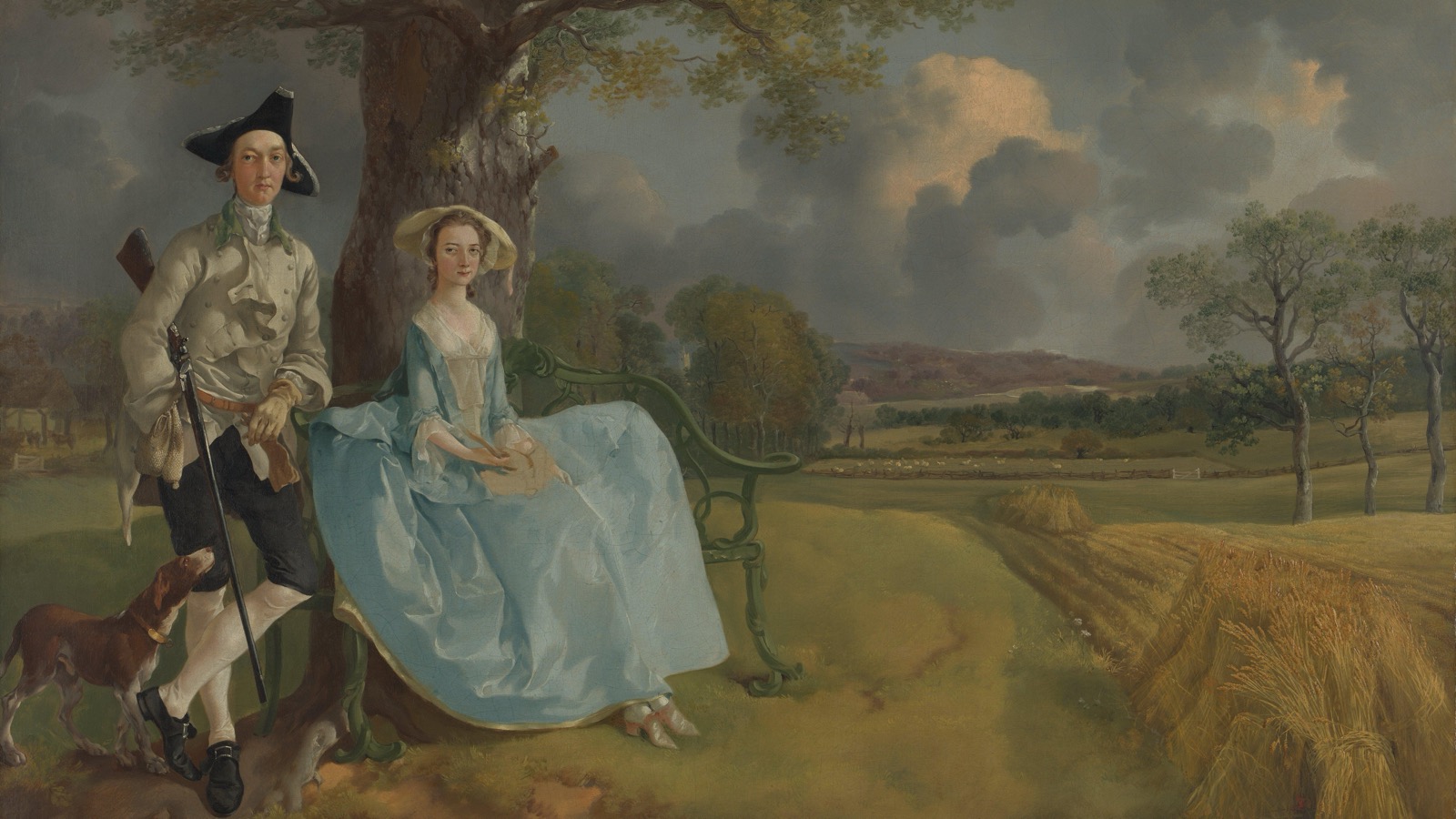
One pale patch in Frances Andrews’s lap is the part of Thomas Gainsborough’s portrait that no one can explain. He may have planned a pheasant. He may have planned a baby. The National Gallery says the answer is unknown. Now that small unfinished space is being shown beside a 1998 sculpture built around larger absences: Yinka Shonibare removed the couple’s heads and the estate behind them.
The land is part of the portrait
`Mr and Mrs Andrews` is an oil painting just under 70 centimeters high and 120 centimeters wide. Robert Andrews stands with a shotgun beside Frances Andrews, who sits beneath an oak tree. The couple occupy the left side. Fields and pasture take over most of the canvas.
It has been described by the National Gallery as a portrait of three subjects: Robert, Frances and their property. Robert owned nearly 3,000 acres, and the gallery says much of the land visible behind the couple belonged to him. The estate is not scenery added after the fact. It helps display their position.
Then there is the unfinished patch in Frances’s lap. One theory holds that Gainsborough meant to paint a pheasant, perhaps one shot by Robert. Another suggests a future baby. The couple’s first child was born in 1751, but the gallery leaves the question open.
Shonibare kept the pose and removed the estate
Nearly 250 years later, Shonibare answered the painting with a life-size sculpture. `Mr. and Mrs. Andrews without their Heads` keeps the couple as figures but removes their heads and the land that helped define their status. Their pale clothing becomes Dutch wax cotton in bright patterns.
According to the National Gallery, this was the first Old Master painting Shonibare answered in the sculptural style for which he became known. Shonibare has said he was drawn to the way clothing and land establish the sitters’ status. He describes his changes as removing their identities and landscape while shifting attention toward fabric, trade routes and connections among places.
Without faces or a painted estate, the sculpture gives the viewer fewer of the signals available in Gainsborough’s original. Clothes, posture and material carry more of the encounter.
The fabric brings another route into the room
Shonibare remade the costumes in Dutch wax cotton, according to the National Gallery. The fabric is strongly associated with West African clothing, and the gallery says Dutch merchants introduced it to Africa in the 19th century.
Shonibare has linked his use of the cloth to trade routes, cultural hybridity and the interconnectedness of places. That is the artist’s account of the material, not a claim that the fabric has one national origin or a single fixed meaning.
Gainsborough’s painting locates the couple through an English estate. Shonibare removes that estate, then gives their clothing a history that crosses borders.
The comparison is finally physical
For the first time, the two works are being displayed together in the H J Hyams Room, according to the National Gallery. Shonibare’s sculpture is on loan from the National Gallery of Canada. Gainsborough’s painting belongs to the London collection.
The free exhibition runs from October 15, 2026 through February 7, 2027, carrying the pairing into the 300th anniversary year of Gainsborough’s birth.
The image on this page shows Gainsborough’s original, not the sculpture or the current installation. In one work, a small absence remains unexplained. In the other, the missing heads and landscape are deliberate. For the first time, both kinds of absence are in the same room.
Sources and supporting documents
Rowan Price is a named OMG editorial voice, not a fictional human biography. This story passed separate evidence, rights, line-editing, originality, and skeptical-review checks before publication.
National Gallery, LondonYinka Shonibare and Thomas Gainsborough: A ConversationNational Gallery, LondonExhibition press releaseNational Gallery, LondonThomas Gainsborough, Mr and Mrs AndrewsWikimedia CommonsPublic-domain image record for Mr and Mrs Andrews