Tickets and live events
The ticket limit was six. The FTC says one broker grabbed 277 seats anyway
Fans saw a sold-out concert. The federal complaint describes more than 75 accounts, 109 transactions, and resale prices reaching $400 a seat.
The limit was six tickets. The FTC says a ticket operation found a way to buy 277. The concert sold out quickly, but the complaint says more than 75 accounts had already been used to pull seats into the resale market.
Six was the limit. The complaint says they bought 277.
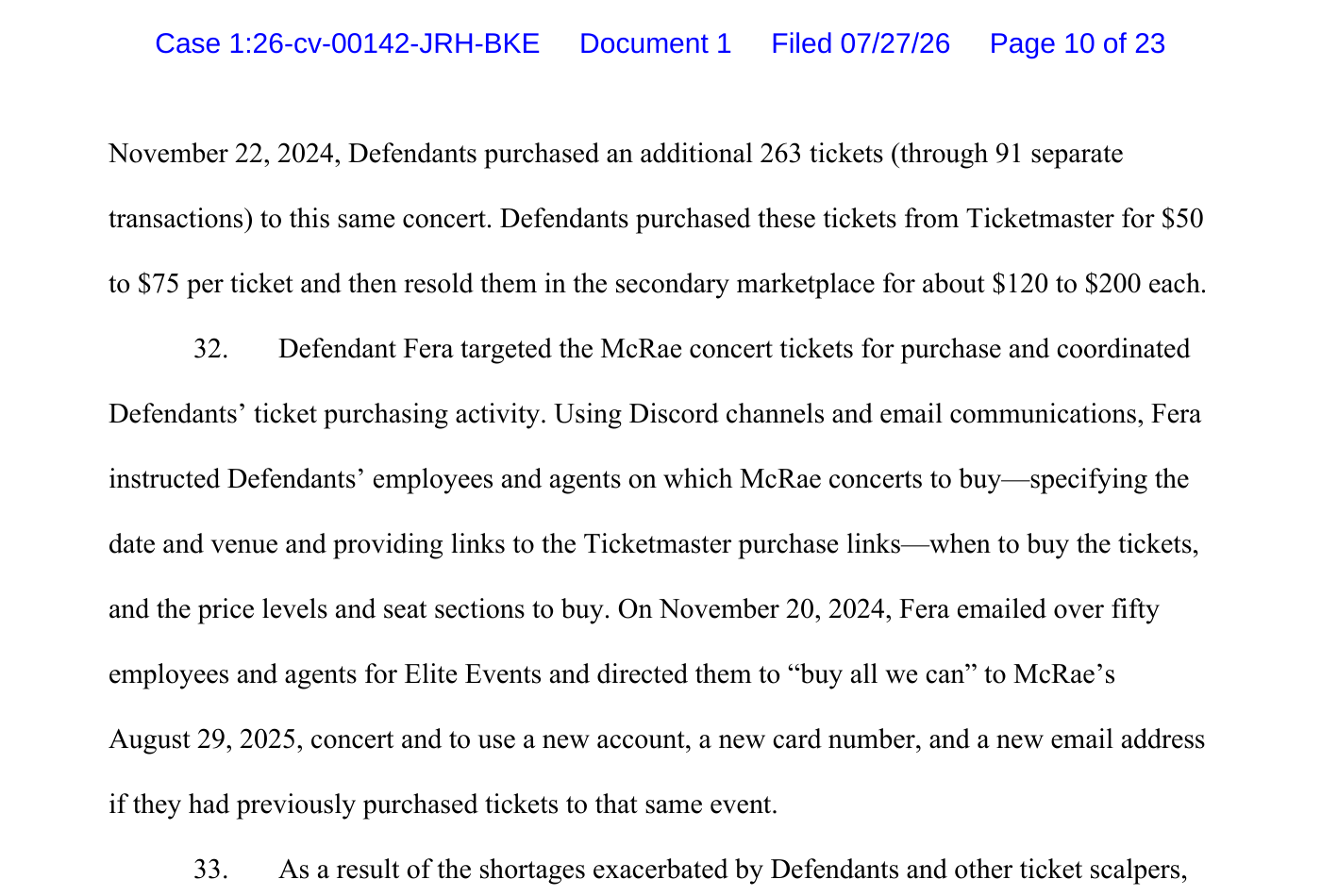
The Metallica concert at Virginia Tech was supposed to come with a simple boundary. Fan-club members could buy four tickets. Students could buy two. The general public could buy no more than six.
According to the FTC complaint, Elite Events and its operators spread their purchases across more than 75 accounts and 109 transactions. The filing says 207 tickets were bought in September 2024 alone, with 113 acquired during the first two days of the presale.
The original prices ran from $50 to $270. The complaint says the tickets later appeared in the resale market for $100 to $400 each.
Then came the instruction: “buy all we can”
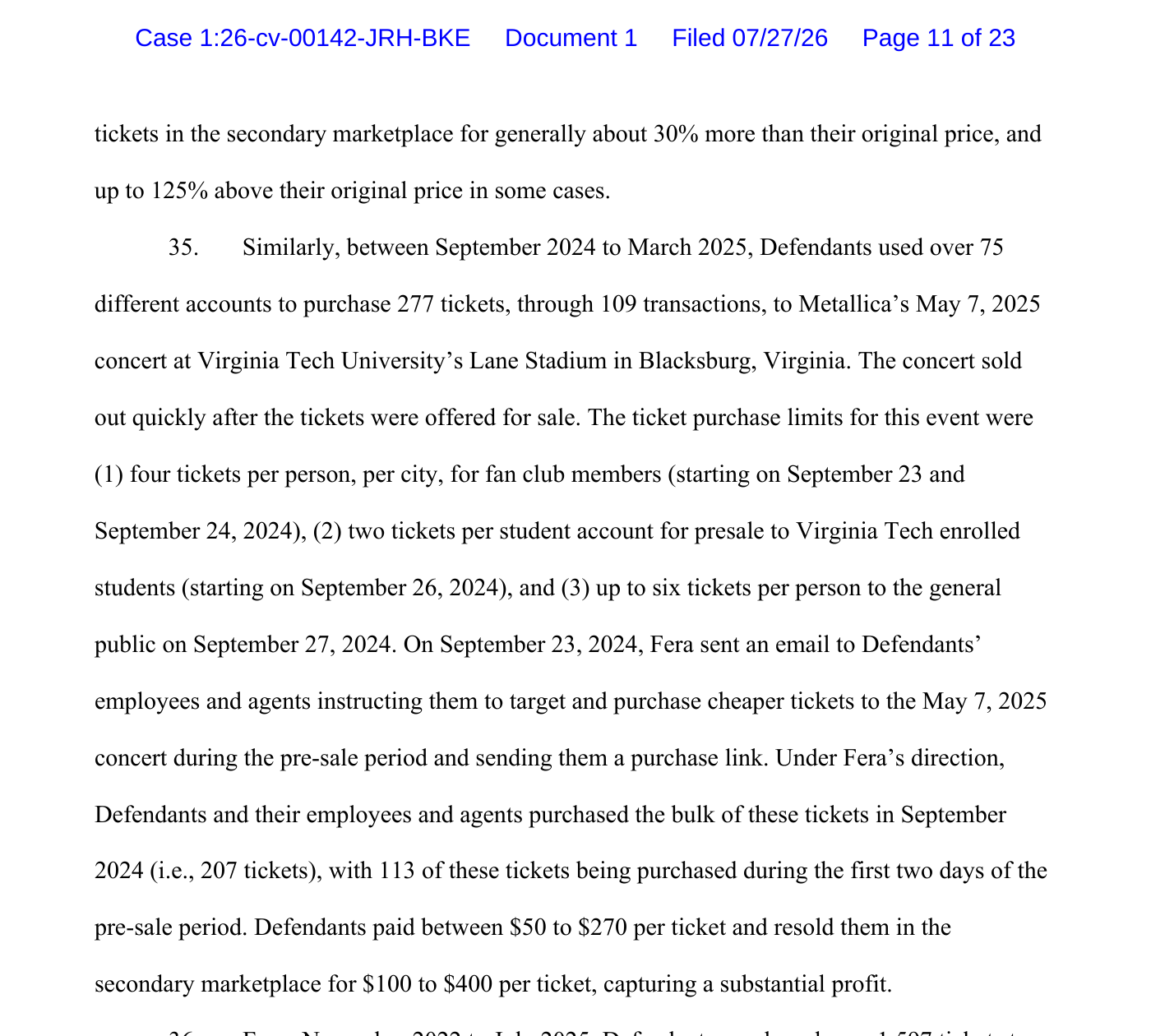
Metallica was only one example. In a section about a Tate McRae concert, the complaint says Aaron Fera used Discord and email to coordinate what employees and agents should buy, when they should buy it, and which seats to target.
The filing says an email went to more than 50 people with the instruction to “buy all we can.” Anyone who had already purchased tickets was allegedly told to come back with a new account, a new card number, and a new email address.
The system was built to look like different buyers
The FTC does not describe one magic button. It describes hundreds of ticket accounts, virtual credit-card accounts capable of generating thousands of card numbers, proxy IP addresses, and buyers working across separate sessions.
Each change could make another purchase attempt look less connected to the last one. The agency says that is how the operation got around controls designed to stop one buyer from swallowing the inventory.
Across more than 2,400 events between July 2022 and August 2025, the complaint says the operation accumulated more than 86,000 tickets beyond posted limits.

Fans were left staring at the expensive version
A sold-out notice looks like the end of a sale.
In this case, the FTC says it was also the beginning of a second one. Seats originally priced from $50 to $270 were offered for $100 to $400 in the Metallica example.
That does not mean every ticket sold at the highest price. It does show the squeeze: ordinary buyers were pushed toward a resale market stocked, according to the government, by purchases that ignored the same limits everyone else had to follow.
The case is still a set of allegations
The FTC and the defendants have proposed a settlement calling for more than $10.7 million in civil penalties. Most of that amount would be suspended after a $300,000 payment because of the defendants' stated inability to pay.
A federal judge must approve and sign the order before it has the force of law. Until then, the complaint is the government's account of what happened, not a verdict from a completed trial.
Sources and supporting documents
Cass Vega is a named OMG editorial voice, not a fictional human biography. This story passed separate evidence, rights, line-editing, originality, and skeptical-review checks before publication.
Federal Trade CommissionFTC announcement and proposed settlement summaryFederal Trade CommissionComplaint for permanent injunction and civil penalties