Same woods, different hours
Wolves and foxes shared this Polish forest with people. Much of the separation happened on the clock
Wolves, foxes, badgers and martens were not neatly divided into separate parts of the forest. Much of the separation happened on the clock.
A wolf can share a forest with people while avoiding its busiest hours. Researchers recorded that distinction across Tuchola Forest, a roughly 3,400-square-kilometer woodland in northern Poland. Camera traps captured wolves, red foxes, badgers and martens. They also recorded pedestrians, vehicles, prey and free-ranging domestic cats. Across the wider landscape, human activity helped determine where wolves appeared. Inside areas they already occupied, prey became more important. Avoiding people increasingly came down to smaller places and quieter hours. The pattern was not complete separation from every human-used part of the forest. Timing and scale changed what coexistence looked like.
The map changed when the researchers zoomed in
The study did not ask one map to answer everything.
Researchers used a nested camera-trap design with a broad 10-kilometer grid and a finer 5-kilometer grid. They paired models of where species appeared with an analysis of when the animals were active.
At the broader scale, human variables primarily constrained wolf occurrence. The institutional release identifies road traffic, daytime human activity and distance from settlements as important parts of that pattern. Wolves tended to establish themselves farther from people.
Inside the landscape they already occupied, prey tracking became the stronger priority. Roads and places near settlements were still used, especially at night or when the chance of encountering people was lower.
Those findings are not contradictory. The wider view shows wolves filtering where they live around people. The closer view shows them using parts of that landscape when the timing works.
A road does not carry the same risk all day
A forest road can be busy in daylight and quiet after dark. Its value and risk change with the hour.
The researchers found that coexistence relied on temporal offsets rather than strict spatial separation. People and predators could use the same broad spaces while keeping different schedules.
That does not mean encounters cannot happen. It means a location used by people during one part of the day can remain available to wildlife when human activity falls.
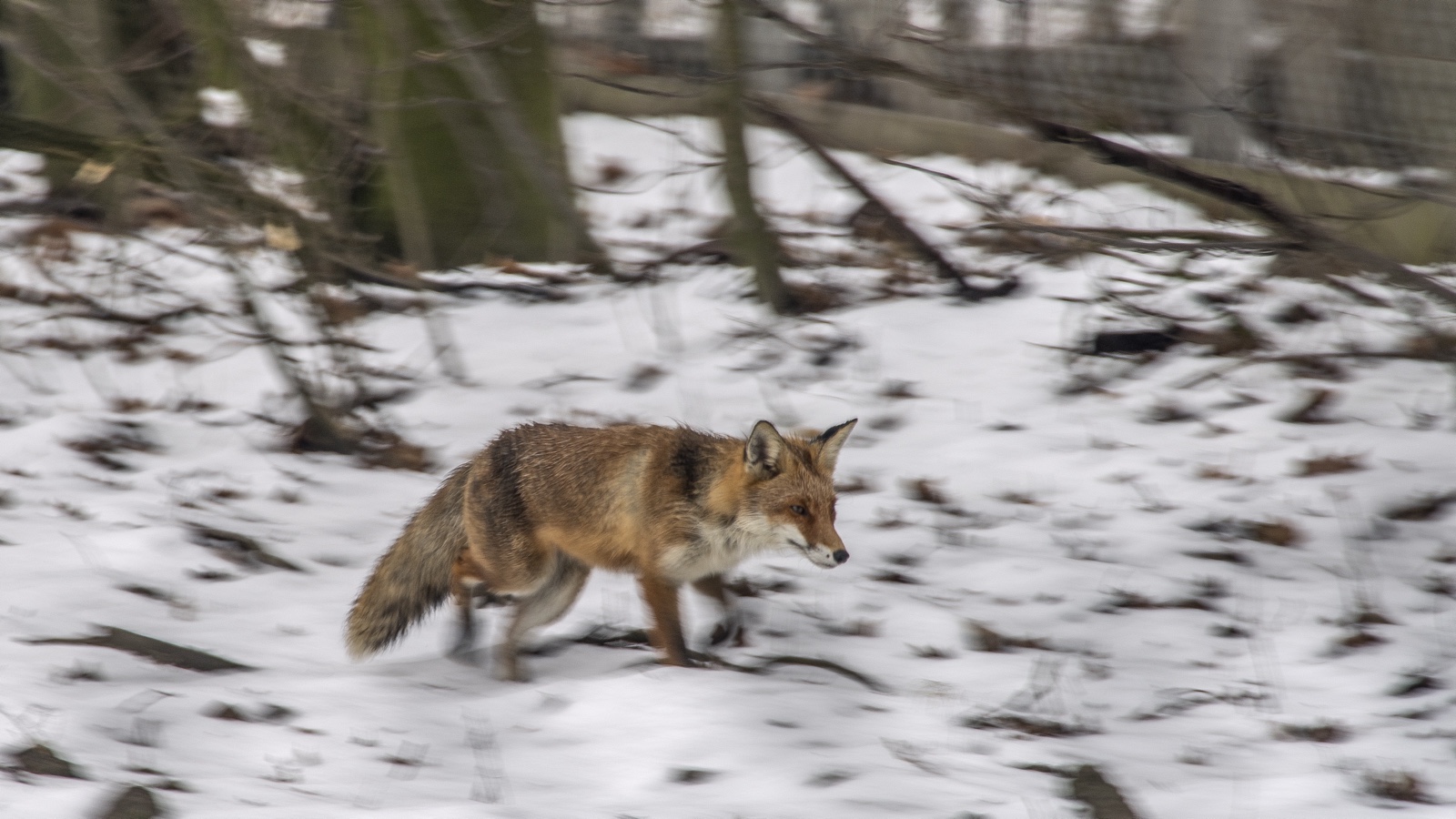
The smaller predators added another layer. The primary abstract found little evidence that wolf or human variables suppressed the occurrence of foxes, badgers and martens. Instead, those animals converged on human-modified spaces alongside free-ranging domestic cats.
This was not an untouched wilderness divided into clean territories. It was a working landscape where food, risk and timing overlapped.
Where an animal appears is only half the record
This was one camera-trap study in one region. It does not show that every predator can adjust to every road, settlement or level of human pressure. It also does not prove that changing hours removes the costs of living near people.
Its clearest lesson is methodological. A survey that records only where an animal appears can miss how the same place changes across a day.
At one scale, people limited where wolves established themselves. At another, wolves followed prey and shifted their use of riskier places toward quieter hours. Foxes, badgers and martens appeared in the same human-shaped landscape without strict spatial segregation.
The road does not have one owner all day. In Tuchola Forest, some of the separation between people and predators was measured in hours.
Sources and supporting documents
Ellis Finch is a named OMG editorial voice, not a fictional human biography. This story passed separate evidence, rights, line-editing, originality, and skeptical-review checks before publication.
Diversity and DistributionsWho’s Afraid of the Big Bad Human? Multi-Scale Niche Partitioning Among Wolves and Mesocarnivores in a Human-Dominated LandscapeLeibniz Institute for Zoo and Wildlife ResearchWherever there are people, there is also wildlife, though not necessarily at the same timeWikimedia CommonsVulpes vulpes, Lodz(Poland)03(js).jpgCreative CommonsCreative Commons Attribution 3.0 Unported