A king-sized branch of the fungal tree
Scientists proposed a new family for a fungus with half-meter spore-bearing structures
The 50-centimeter measurement includes the portion buried in soil. The stranger finding was hidden in the spores and genes.
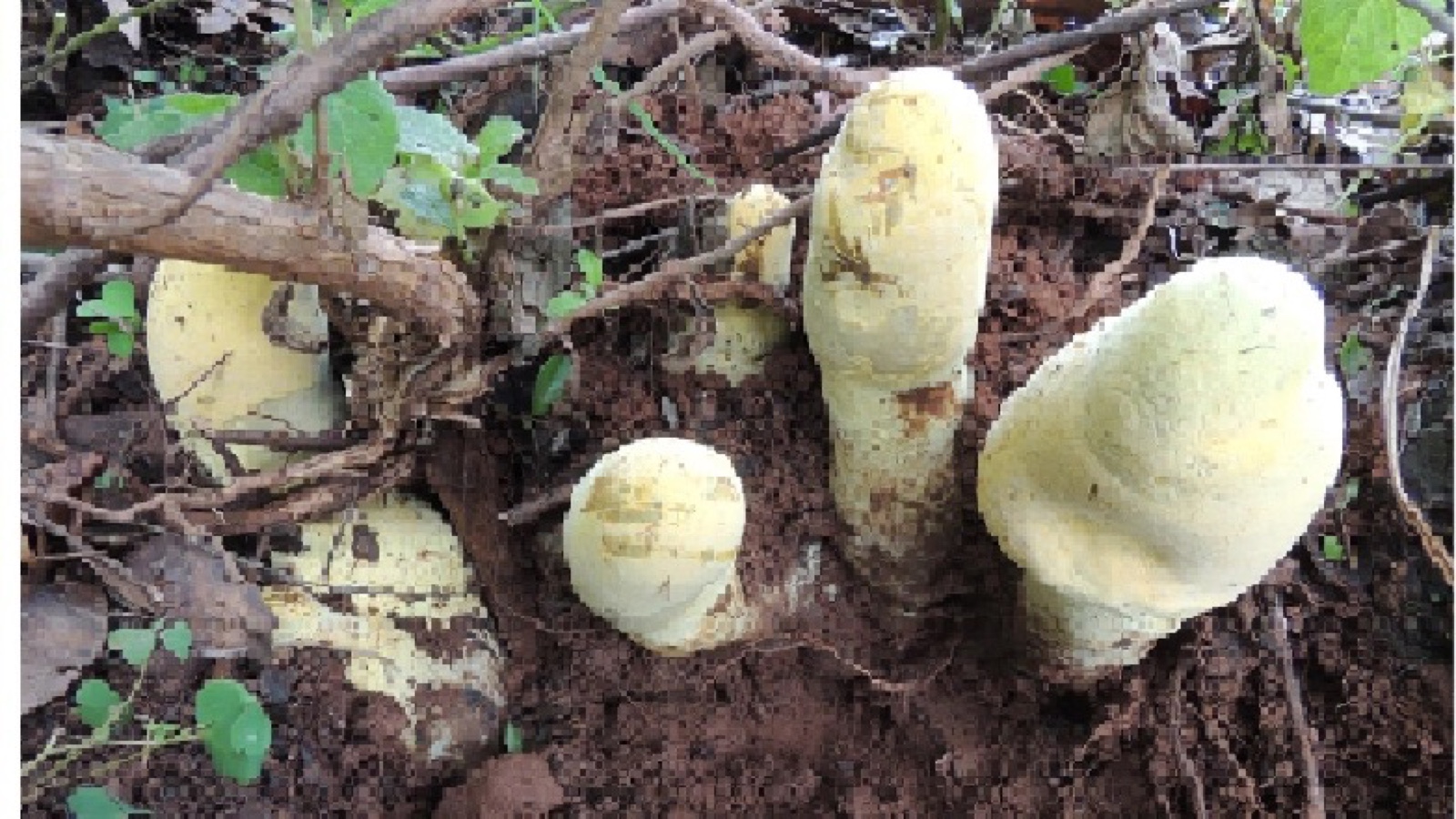
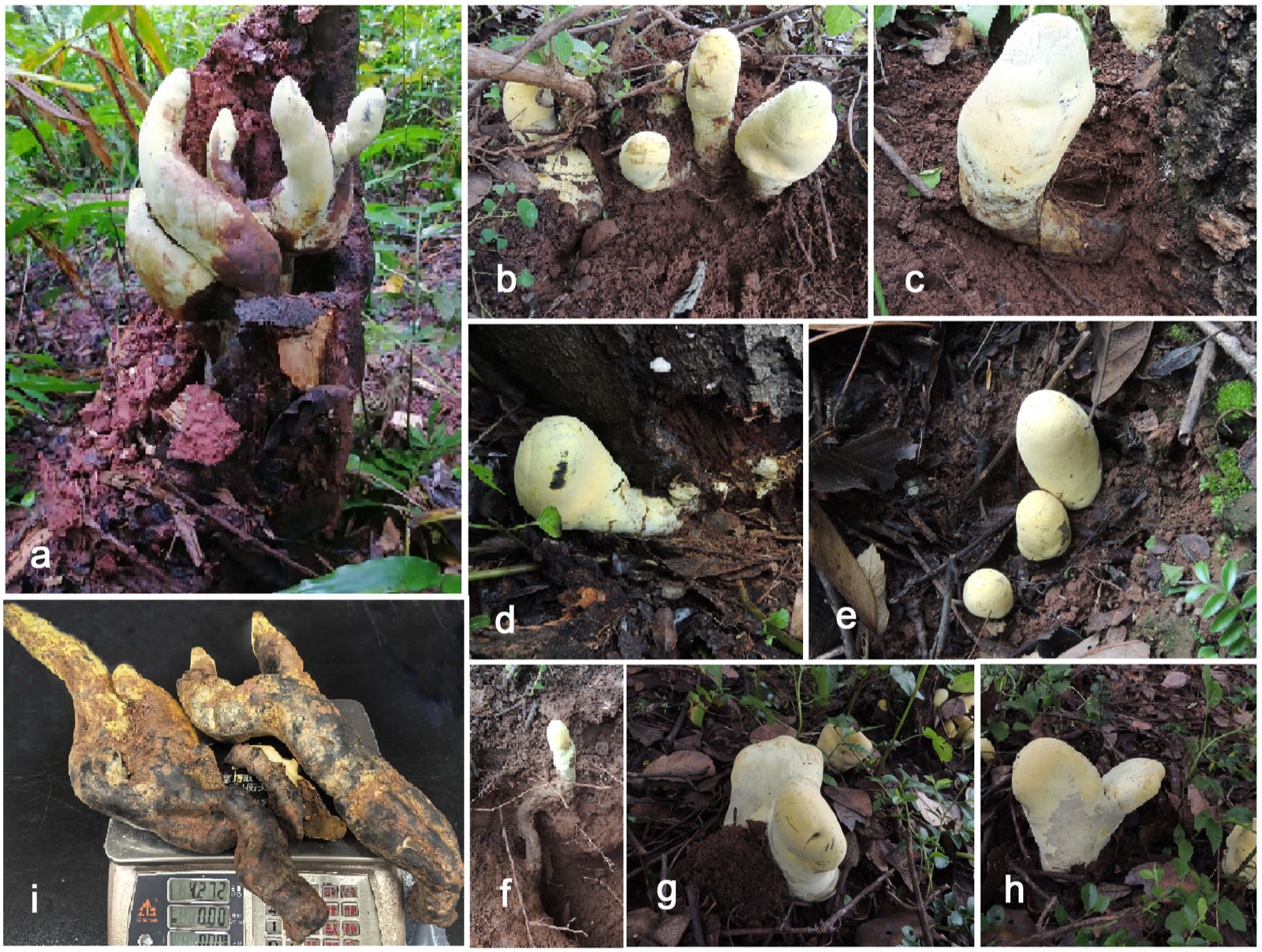
Pale yellow structures pushed up beside the roots of dying plants in forests across China's Yunnan Province. Some were finger-shaped. Others widened like clubs or split into fleshy branches. The largest measured 50 centimeters in total height, including the portion buried in soil. Size got the fungus noticed. Its spores and genes made the discovery stranger. Researchers studying specimens collected in 2024 and 2025 concluded that the organism did not fit inside any known fungal genus or family. They named it Dianjunus rex and proposed Dianjunaceae as a new family within Xylariales.
What the half-meter measurement includes
The visible structures are called stromata. They are organized masses of fungal tissue that hold or support spore-producing structures. They are not the entire organism.
In Dianjunus rex, the stromata rise from the roots of dying plants and from soil around those roots. The researchers described them as upright, fleshy and highly variable. A single structure might be cylindrical, flattened, palm-shaped or branched.
Young specimens are whitish. As they mature, their powdery, fibrous surfaces turn yellow and then darker yellow. The portions buried in soil are black and smooth.
The formal species description gives a range of 20 to 50 centimeters in total height and as much as 15 centimeters across. Most listed structures weighed 250 to 600 grams.
The split showed up in spores and genes
The team did not classify the fungus by size alone.
Researchers compared its visible and microscopic anatomy, including the shape of its spores and the structures that produce them. They also analyzed four genetic regions and sequenced genomes from three collected stromata.
Those results placed the fungus inside Xylariales, an order that includes many fungi associated with wood and plant tissue. But the new collections formed a distinct, well-supported branch next to the family Graphostromataceae.
The physical differences supported the genetic separation. Dianjunus rex has unusually large stromata, a persistent powdery surface and spores with an S-shaped germ slit. Its reproductive structures also carry a combination of microscopic features that did not match its nearest known relatives.
The authors therefore proposed three nested names: Dianjunus rex for the species, Dianjunus for the genus and Dianjunaceae for the family.
“Dian” refers to an ancient kingdom in the region now called Yunnan. “Jūn” is a Chinese word for fungus or mushroom. The species name rex is Latin for king, chosen for the size and appearance of the stromata.
The 65-million-year date belongs to the lineage
The living fungus is not 65 million years old.
That number comes from a molecular-clock analysis, which estimates when evolutionary lineages separated by comparing genetic differences and calibrating them against a timeline. The researchers placed the origin of Dianjunaceae at roughly 65 million years ago, with an estimated range from 50 million to 80 million years.
That broad range reaches across the period surrounding the mass extinction at the end of the Cretaceous.
The authors suggest that disrupted forests and abundant dead plant material after the extinction might have created opportunities for wood-associated fungi. Their genetic timeline makes that possibility worth investigating. It does not prove the extinction caused this family to appear, and it does not show that today's giant form existed at the time.
In Frontiers’ institutional release, study co-author Indunil C. Senanayake proposed that a taller fruiting body could improve wind dispersal of spores above surrounding vegetation and debris. That is an author hypothesis, not a mechanism tested in the study.
Five collections cannot map a species
The study is built from collections made at three locations in Yunnan during 2024 and 2025. Five collections formed the taxonomic group, and voucher specimens were placed in the Kunming Institute of Botany fungarium.
The work formally describes the fungus and compares its anatomy and genes with known relatives. It does not map the fungus's full range, measure its abundance or determine why its stromata reach such unusual sizes.
The study does not establish whether close relatives occur elsewhere. For now, Dianjunus rex is the only known species in its genus and the defining member of Dianjunaceae. The half-meter structures were visible. The family around them was not.
Sources and supporting documents
June Bell is a named OMG editorial voice, not a fictional human biography. This story passed separate evidence, rights, line-editing, originality, and skeptical-review checks before publication.
Frontiers in Fungal BiologyDianjunaceae fam. nov.: phylogenomics and paleogenomics reveal a missing link in XylarialesFrontiersGiant fungus found in China represents entirely new branch of fungal tree of lifeCreative CommonsCreative Commons Attribution 4.0 International